In slitting production, many users retrieve circular blades from long-term warehouse storage and find yellowish-brown rust spots on the cutting edge. When faced with rust spots, the most common concern is: do these rust spots affect cutting performance? Can the blade still be used? Mingbai Mechanical Tool Technology Co., Ltd., based on materials science and field experience, provides scientific judgment criteria and handling recommendations.
1. The Nature and Hazards of Rust Spots
Rust spots are the product of electrochemical reactions between the blade's metal surface and oxygen and moisture in the air. For precision mechanical blades made of high-carbon steel, high-speed steel, and similar materials, once rusting begins, it penetrates from the surface inward. The harm of rust spots depends on three factors: location, depth, and morphology.
2. Three Types of Rust Spots on the Cutting Edge
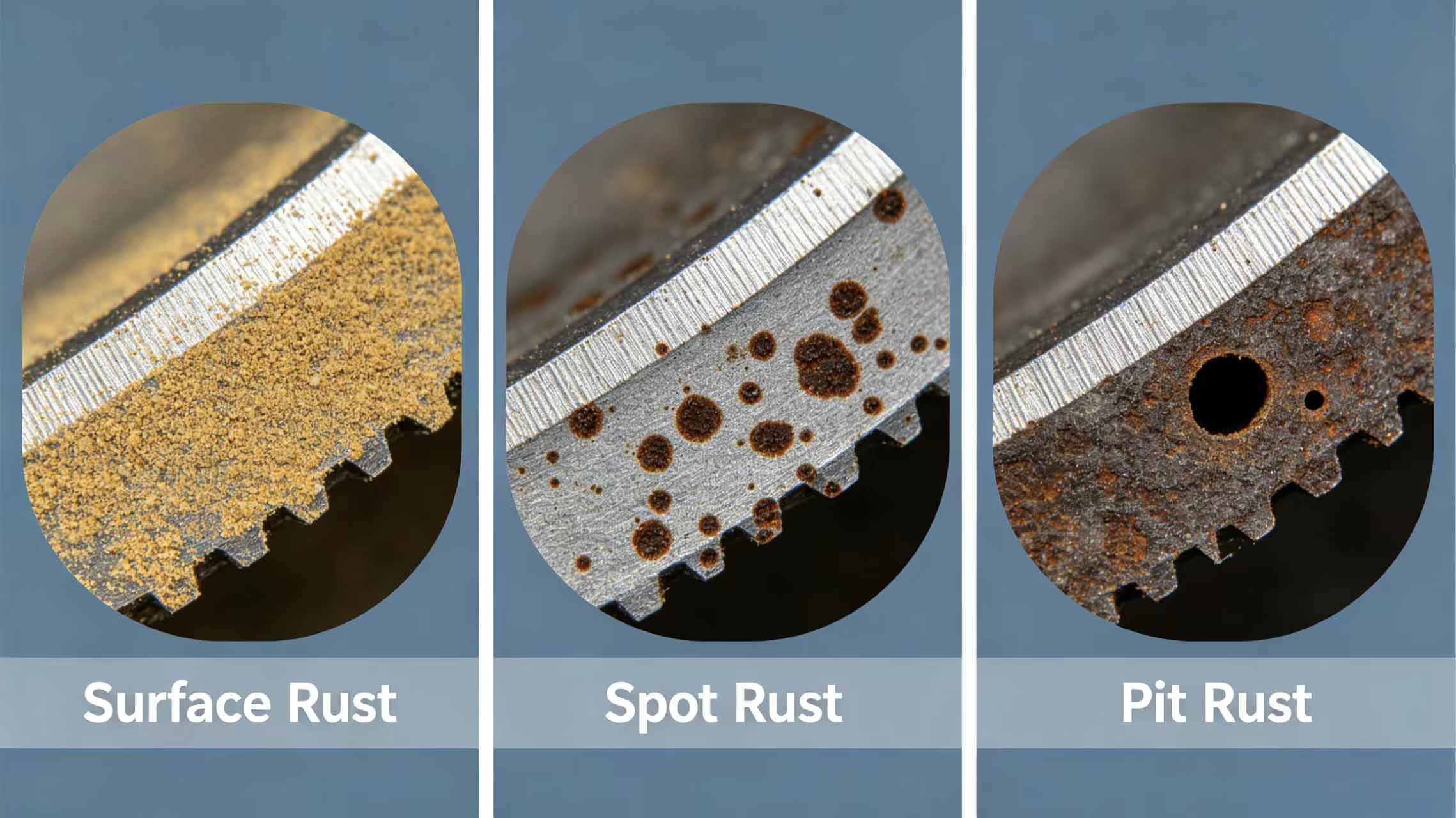
Surface flash rust (mild)
Characteristics: Yellowish-brown powdery rust, present only on the surface, depth < 0.01mm, removable with a cloth.
Impact: After removal, no visible pits remain on the edge — does not affect performance.
Pitting rust (moderate)
Characteristics: Dark brown or black spots, depth 0.01-0.03mm, leaving tiny pits the size of a pinprick after removal.
Impact: May affect cutting quality, depending on specific working conditions.
Pitted/crater rust (severe)
Characteristics: Dark brown or black depressions, depth > 0.03mm, leaving obvious pits or grooves after removal.
Impact: Significantly affects performance, causing burrs or chipping during cutting — replacement is recommended.
3. Four-Step Method to Determine Whether Rust Spots Affect Performance
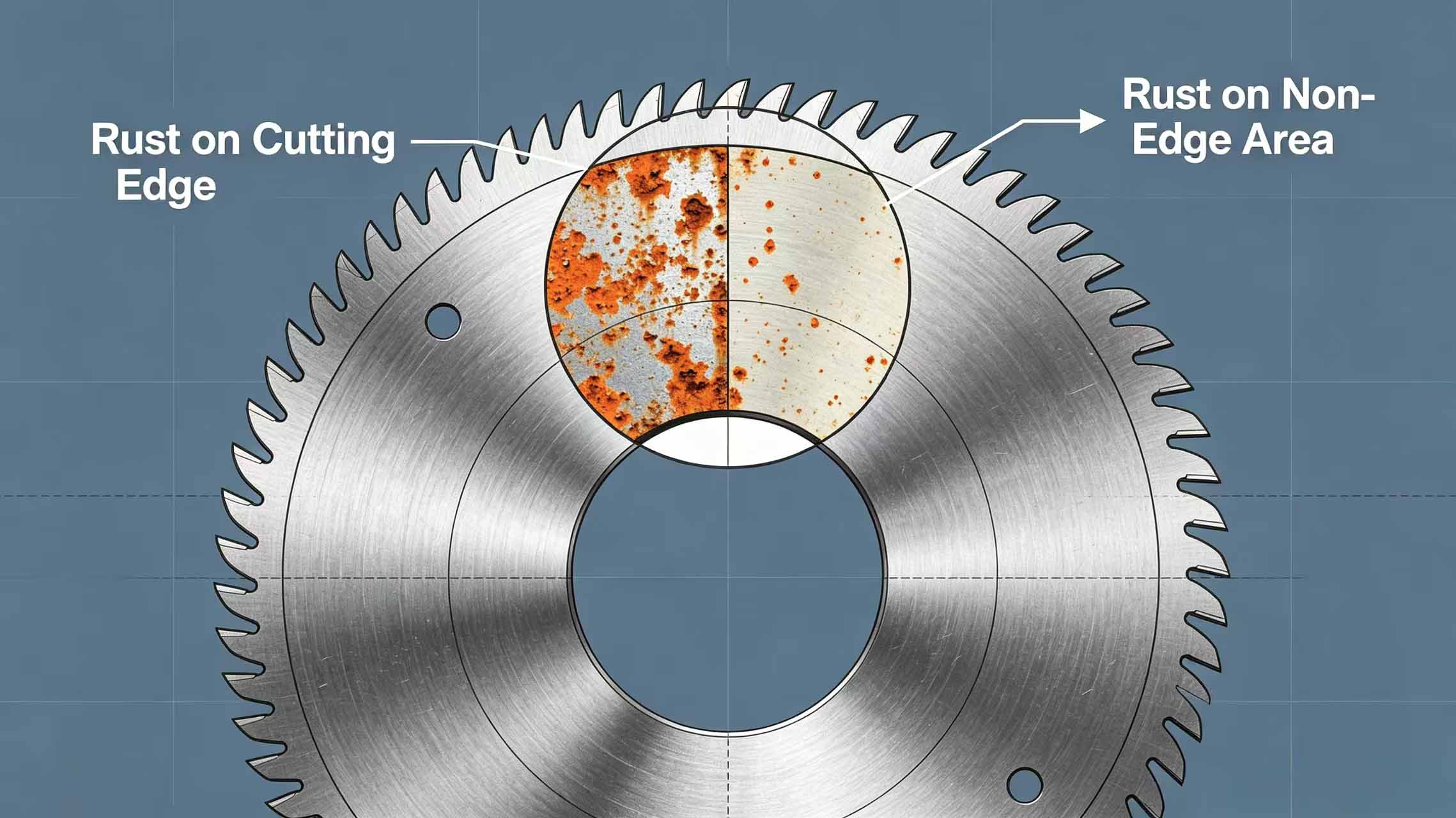
Step 1: Check the rust spot location
Rust spots on the cutting edge → directly affect cutting quality and require careful handling. Rust spots on the blade body (non-edge areas) → do not affect performance; clean and use. Inspection method for rust spots on stored circular blades starts with location.
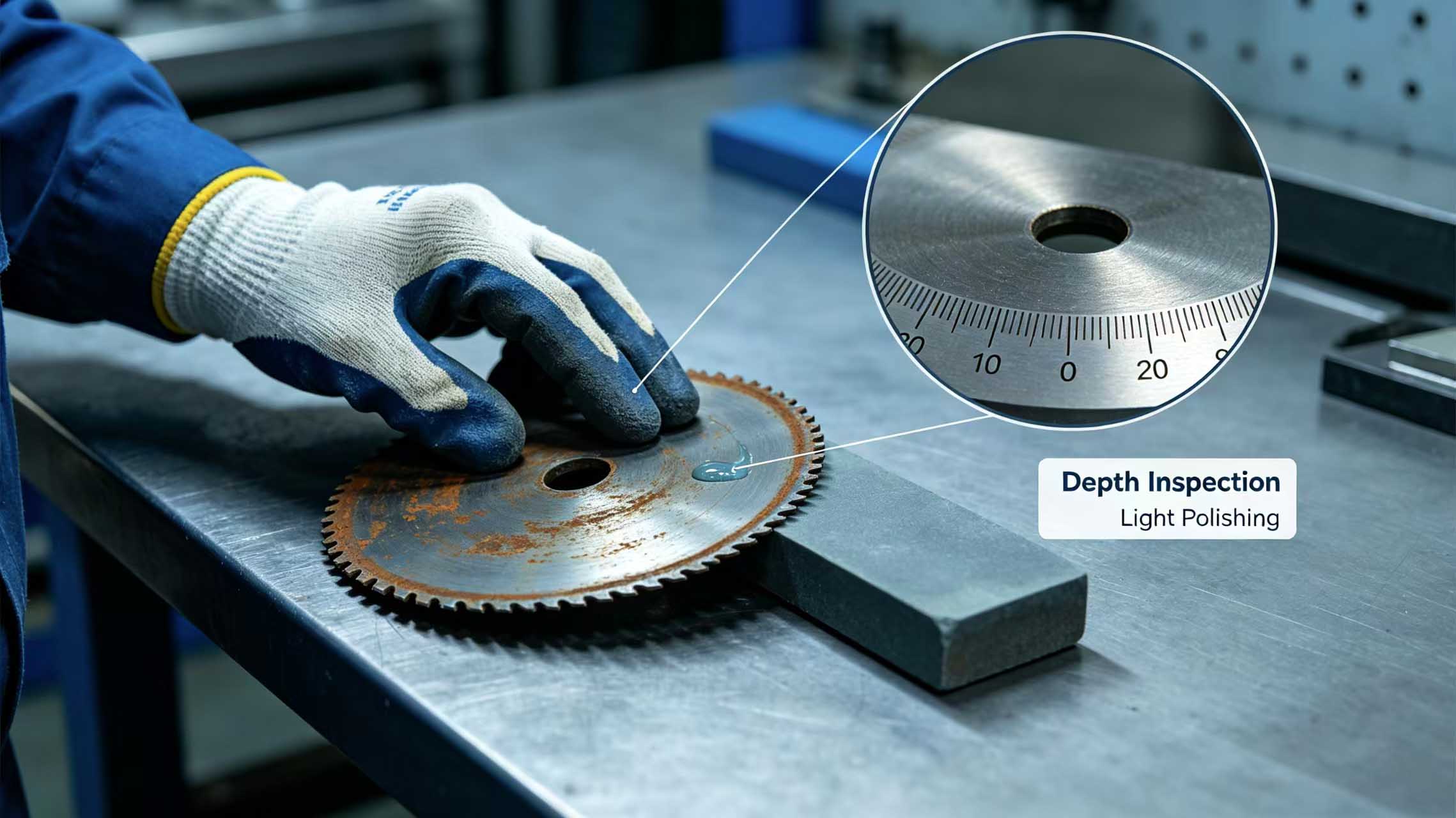
Step 2: Assess rust spot depth
Gently sand the rusted area with fine sandpaper or an oilstone. If the surface is flat without pits after sanding → flash rust, can continue to be used. If obvious pits remain → rust has penetrated the substrate; assess whether edge integrity is compromised.
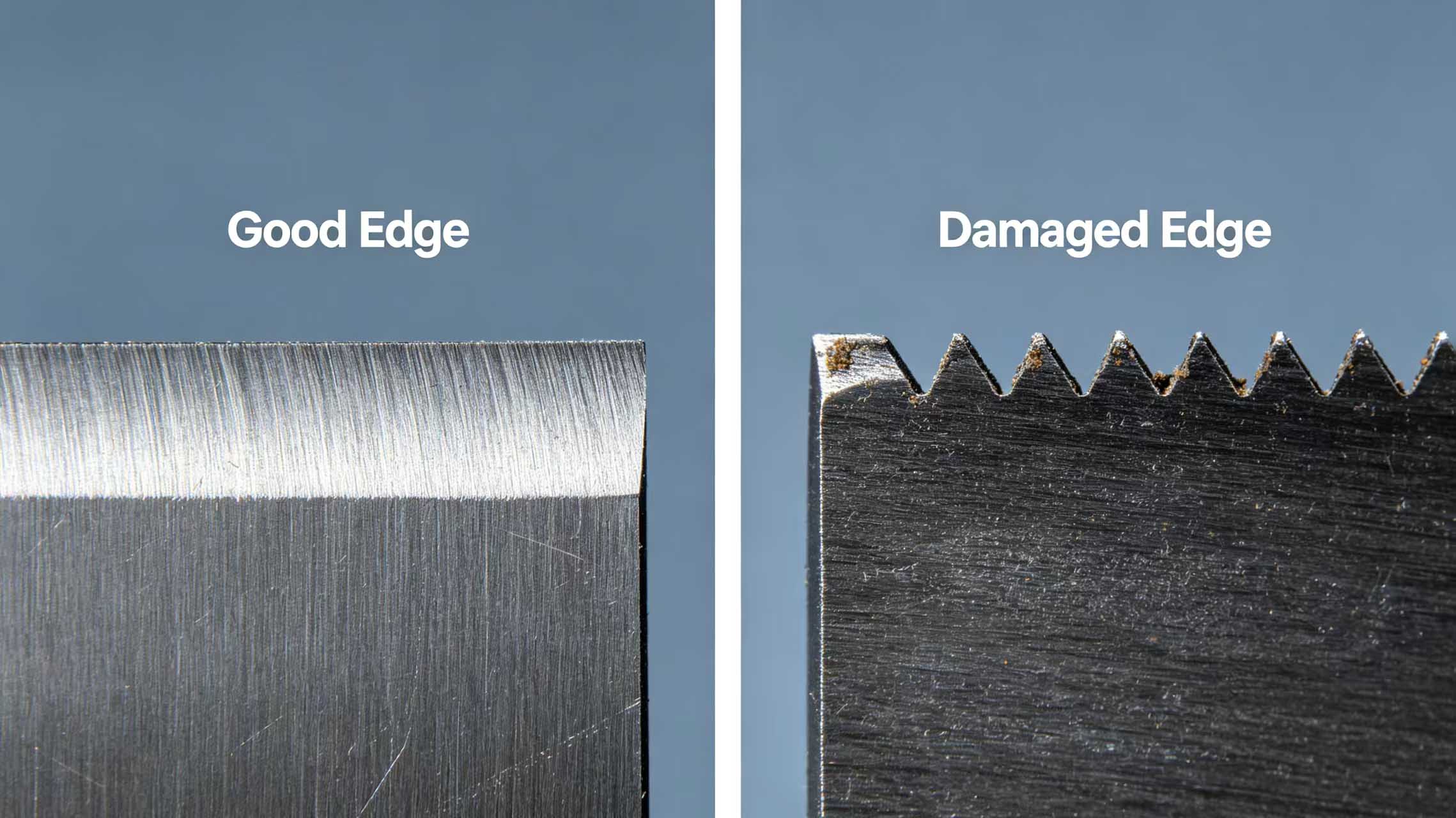
Step 3: Check edge integrity
Use a magnifying glass to inspect the edge. If the edge remains straight and intact → rust has not damaged the edge geometry. If the edge appears jagged or has notches → rust has damaged the edge, and circular blades for precision slitting will directly affect cutting accuracy.
Step 4: Verify through trial cutting
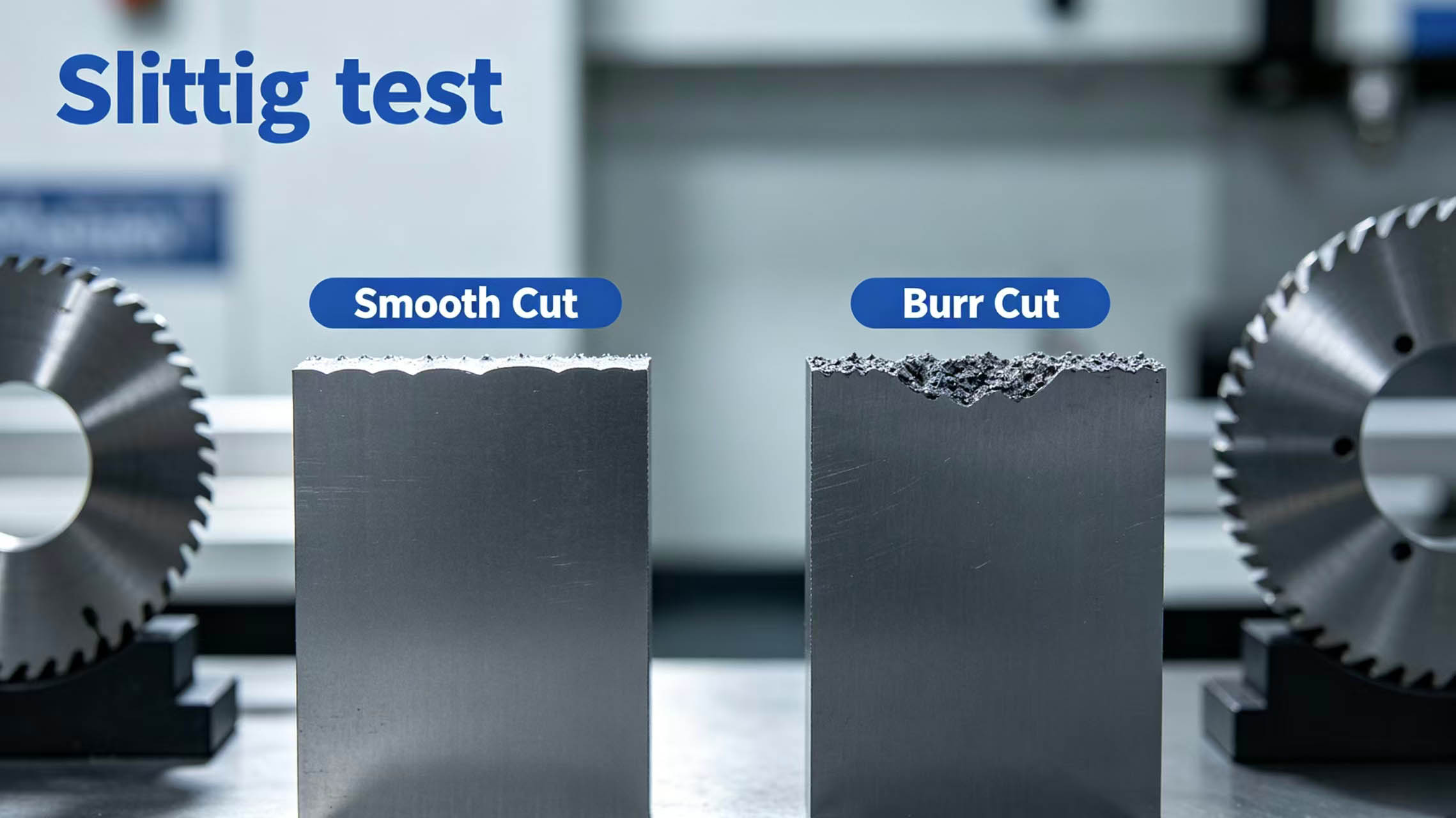
After cleaning the rust, perform a trial cut. Smooth cut edge without burrs → performance restored. Obvious burrs or uneven edges → rust has affected performance; recommend replacement or return to factory for regrinding.
4. Rust Tolerance of Different Blade Materials
High-speed steel circular blades: Most sensitive to rust. Pitting deeper than 0.02mm is recommended for replacement.
Carbide blades: The substrate does not rust, but the cobalt binder phase may corrode; edge strength must be checked.
Stainless steel blades: Good corrosion resistance. Rust spots usually stay on the surface with shallow depth. Ultra-thin circular blades for food packaging film slitting are more sensitive to defects and require special attention.
Coated blades: Rusting tends to occur where the coating is damaged; confirm whether rust has penetrated the coating.
5. Rust Removal Methods
Flash rust removal
Gently sand with a fine oilstone (1000 grit or higher) with oil, or lightly brush with a brass wire brush, then wipe with rust preventive oil for protection.
Moderate rust removal
Sand with fine sandpaper (800-1200 grit) until the surface is bright, taking care not to alter the edge geometry. Then inspect edge integrity with a magnifying glass.
Deep rust treatment
Directly scrap, or send back to Mingbai Technology for evaluation to see if it can be restored through regrinding. If the edge is intact after regrinding, it can continue to be used.
6. How to Prevent Rust Spots in Storage?
· Control storage environment humidity between 40%-60%.
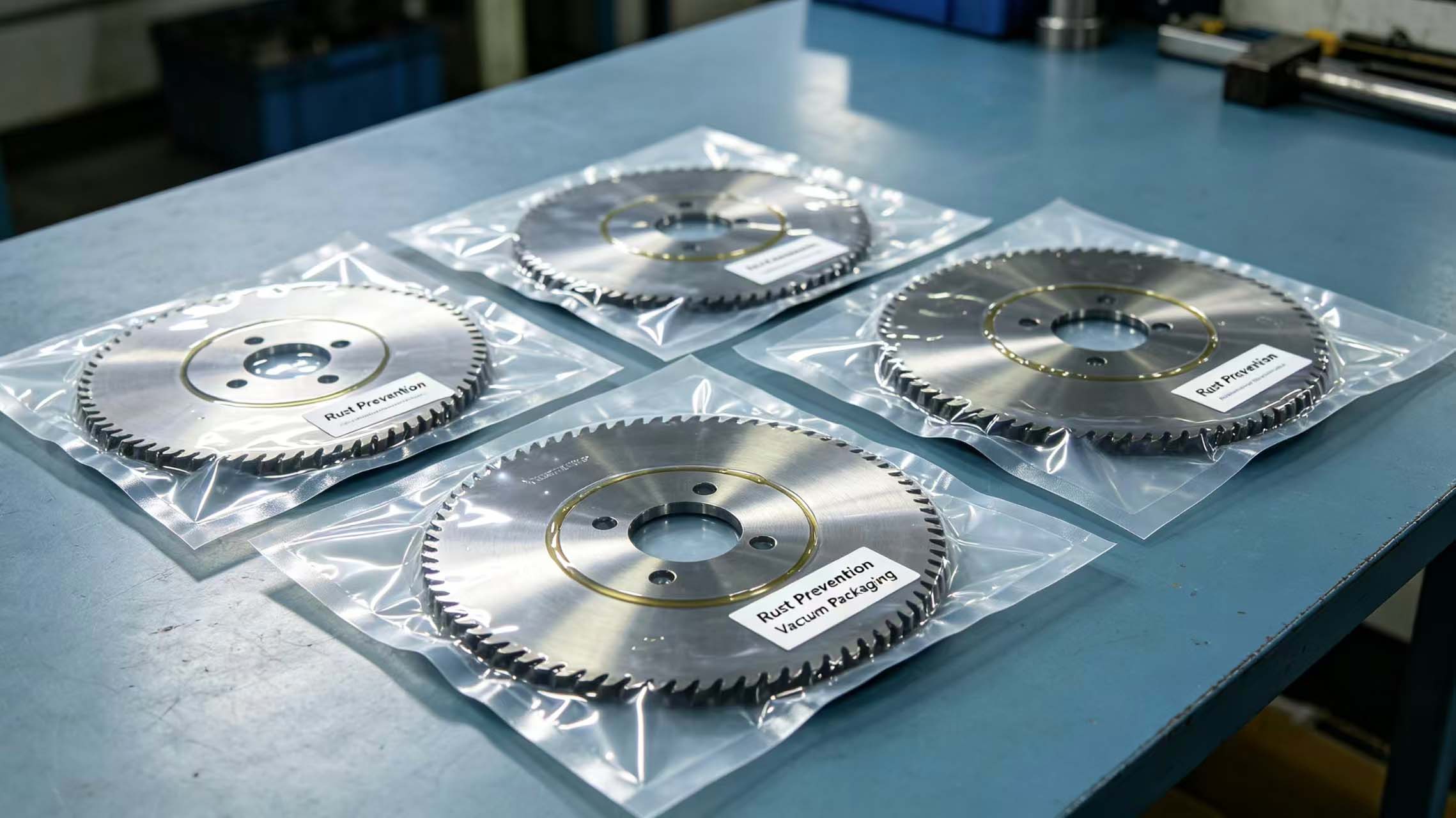
· Long-term stored custom slitter blades should be coated with rust preventive oil and vacuum-packed.
· Regularly inspect inventory, spot-check every 3 months.
· Store blades of different materials separately to avoid galvanic corrosion.
7. Mingbai Technology's Rust Inspection Services
Mingbai Mechanical Tool Technology Co., Ltd. offers rust evaluation for stored circular blades services:
· Free visual inspection to determine rust type and depth.
· Microscope inspection of edge integrity.
· Provide repair or replacement recommendations.
· Professional rust removal and regrinding services for repairable blades.
Conclusion
Rust spots on the cutting edge of circular blades after long-term storage do not necessarily mean the blade is scrap. Surface flash rust can be cleaned and does not affect performance. Pitting rust requires assessment of location and depth. Pitted/crater rust or edge damage should be scrapped or sent back for repair. The key steps are: "check location, measure depth, inspect edge, verify through trial cutting." Mingbai Technology is ready to provide professional rust inspection and repair services for you.
Website: www.mingbaiblade.com