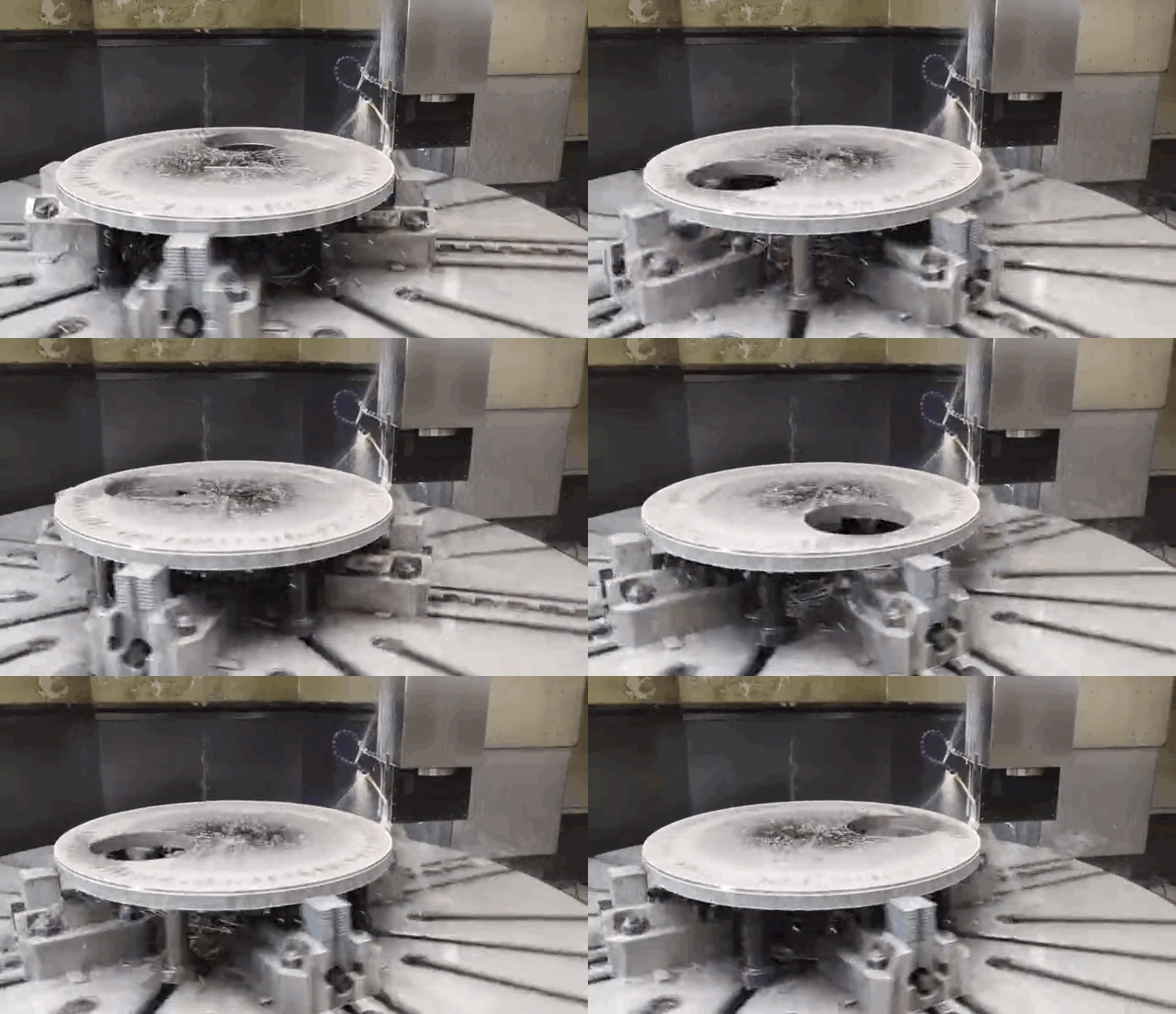
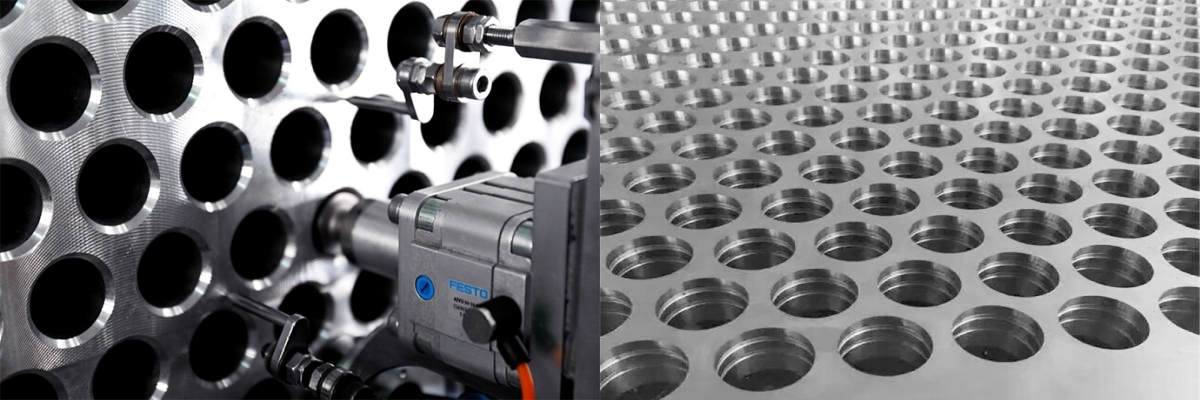
Tube sheet refers to the plate used for supporting and protecting pipelines. Pipelines are usually connected to the tubesheet through mechanical fixation or welding after drilling. In addition to serving as a fixing function, the pipe plate can also withstand the fluid and pressure inside the pipeline, reducing vibration and damage during operation. Carbon steel tube sheet, as a common tube sheet material, has a wide range of applications.
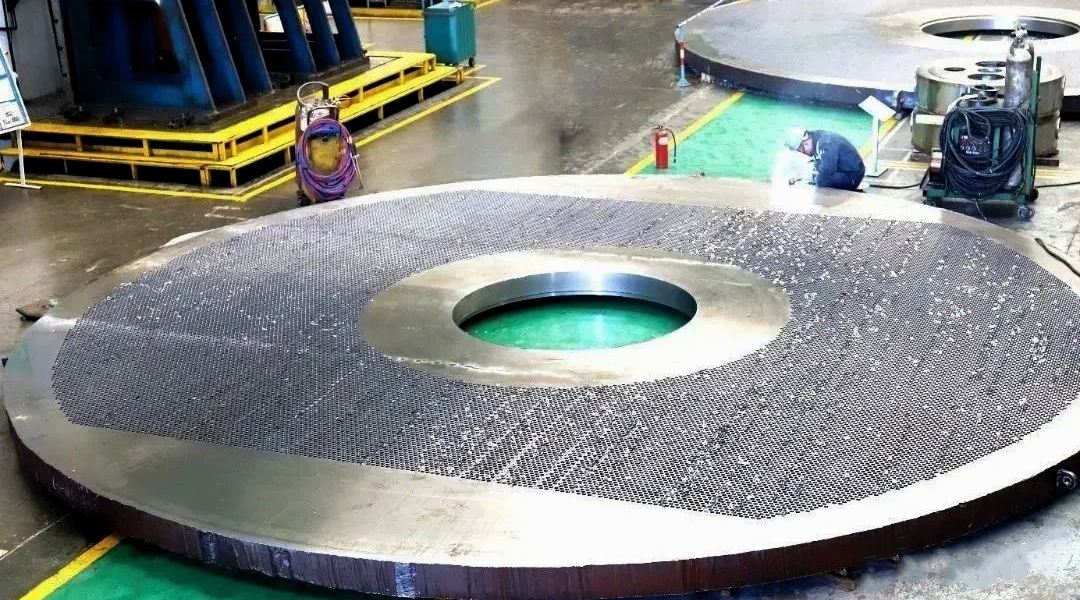
Carbon steel tube sheets are mainly composed of iron and carbon, which contain a high proportion of carbon elements, usually between 0.2% and 2.1%. In addition, it may also contain small amounts of elements such as manganese, silicon, and phosphorus, which can improve the strength and corrosion resistance of carbon steel plates. Here are some main advantages and disadvantages of carbon steel pipe sheets:
Advantages:
1. High cost-effectiveness: Carbon steel, as a common and economical material, is more affordable compared to other high alloy materials, making carbon steel pipe sheets the preferred choice in many applications.
2. High strength: Carbon steel is a type of steel with high strength, and its tensile strength is usually between 400-550MPa. This enables carbon steel plates to have high strength and rigidity under heavy loads and high pressures, enabling carbon steel pipe plates to maintain stability and reliability in high temperature and high pressure environments.
3. Good wear resistance: Carbon steel plates can achieve higher hardness and good wear resistance after heat treatment. Therefore, in some situations where wear resistance is required, carbon steel plate is the preferred material.
4. Easy to process and weld: Due to its low carbon content, carbon steel plates have good plasticity and weldability, and can be processed through various methods such as cold processing and hot processing. This makes the manufacturing and installation process of carbon steel pipe sheets relatively simple and efficient, reducing production costs and time.
5. Good environmental performance: Compared to other materials, carbon steel plates have better environmental performance. It can be recycled and reused to reduce resource waste and also reduce environmental pollution.
Disadvantages:
1. Easy to corrode: Carbon steel plates are prone to rusting, which is one of their biggest drawbacks. Due to the high content of iron in carbon steel plates, rust will occur when they react with oxygen in the air. This not only affects the appearance, but also leads to corrosion and damage to the surface of the board. Compared to stainless steel and other high alloy materials, carbon steel is more prone to corrosion in corrosive environments such as humidity, acidity, and alkalinity, which may lead to damage and shortened lifespan of the tube plate. To address corrosion issues, surface coatings or the use of anti-corrosion coatings can be used to enhance the corrosion resistance of carbon steel pipe sheets.
2. Not suitable for high temperature and strong acid environments: Carbon steel has lower temperature and acid resistance than high alloy materials, so in some applications that require high temperature or acidic media, carbon steel pipe sheets may not be suitable. This drawback can be avoided by welding other alloy materials to alter the performance of the contact surface.
3. Heavy weight: Compared to some lightweight alloy materials, carbon steel pipe sheets are relatively heavy, which may increase installation and maintenance difficulties.
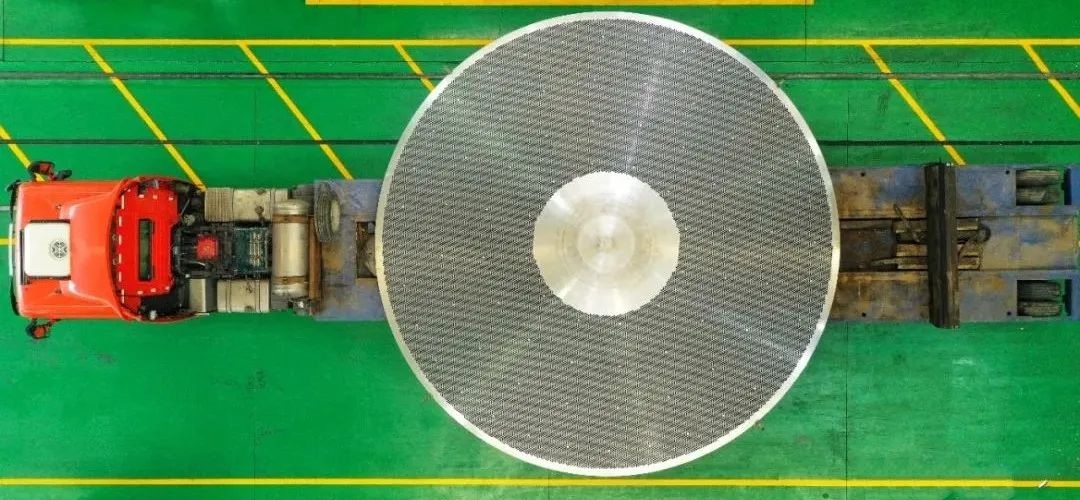
In summary, carbon steel pipe sheets have advantages such as high cost-effectiveness, high strength, and ease of processing. However, their corrosion resistance, temperature resistance, and weight need to be evaluated based on specific application environments, and suitable materials should be selected to meet the requirements.
Explosion-proof centrifugal fans represent a critical advancement in industrial ventilation, specifically designed to operate safely within environments where flammable and explosive substances pose significant hazards. With a meticulous attention to detail and specialized construction, these fans provide essential ventilation without risking ignition or combustion.
The core feature of an explosion-proof centrifugal fan lies in its ability to operate without generating sparks. This capability is indispensable in industries such as petrochemicals, where the presence of flammable gases, dust, and liquids demands utmost caution. In such environments, even the slightest spark can trigger catastrophic consequences. Therefore, every component of these fans is engineered to eliminate any potential ignition sources.
1 Material Selection: The construction of an explosion-proof centrifugal fan begins with the careful selection of materials. All parts that come into contact with gases must be crafted from non-ferrous materials. The use of aluminum impellers, renowned for their spark-resistant properties, is a common practice, ensuring safe operation even in the most volatile settings.
2 Friction Prevention: To mitigate the risk of sparks caused by friction between the impeller and the air inlet, explosion-proof centrifugal fans employ innovative solutions. Throat explosion-proof designs are implemented, featuring the integration of aluminum or copper rings at the fan's air inlet. This strategic placement acts as a barrier against potential sparks, minimizing the threat of fires and other hazardous incidents.
3 Flange Selection: The choice of flange is tailored to the specific requirements of each user's site. Options range from standard flanges to specialized stainless steel chemical flanges, selected based on factors such as environmental conditions and operational needs. This ensures compatibility and optimal performance within diverse industrial settings.
4 Motor Considerations: Perhaps the most crucial aspect distinguishing explosion-proof centrifugal fans from their conventional counterparts is the type of motor utilized. In adherence to stringent safety standards, these fans are equipped exclusively with explosion-proof motors. Engineered to prevent the internal sparking that could ignite volatile substances, these motors are essential components of the fan's overall safety architecture.
In summary, explosion-proof centrifugal fans epitomize the intersection of safety and efficiency in industrial ventilation. Through meticulous design, innovative materials, and specialized components, these fans offer a reliable solution for maintaining optimal airflow in environments where the consequences of ignition are simply not an option. As industries continue to prioritize workplace safety, the demand for these indispensable ventilation systems is only set to grow.
Yjventilationfan is professional industrial fan manufacturer, we can supply best ventilation fans with factory price!
Designing a dryer with an axial flow fan and a heat exchanger involves several steps to ensure efficient drying while maximizing heat transfer. Here's a general guide to designing such a system:
Determine Drying Requirements: Understand the drying requirements for the material you intend to dry, including the required drying temperature, moisture removal rate, and airflow rate.
Select Heat Source: Choose a suitable heat source for the dryer. This could be steam, hot air, or electric heaters, depending on availability, cost, and efficiency considerations.
Design the Heat Exchanger: Select a type of heat exchanger that suits your application. Fin tube heat exchangers are commonly used. Determine the size, material, and configuration of the heat exchanger based on the heat transfer requirements and available space.
Integrate the Heat Exchanger with the Dryer: Position the heat exchanger within the dryer system such that the airflow from the axial fan passes through it. Ensure proper sealing to prevent air leakage and maximize heat transfer efficiency.
Choose an Axial Fan: Select an axial fan suitable for the airflow requirements of the dryer. Consider factors such as airflow rate, pressure requirements, and energy efficiency. Position the fan to ensure uniform air distribution throughout the dryer.
Design the Dryer Chamber: Design the dryer chamber to accommodate the material to be dried and facilitate efficient airflow. Consider factors such as chamber size, insulation, air inlet/outlet placement, and material handling mechanisms.
Control System Design: Develop a control system to regulate the operation of the fan, heat source, and other components of the dryer. Incorporate temperature and moisture sensors to monitor drying conditions and adjust parameters as needed.
Safety Measures: Implement safety features such as temperature and pressure alarms, emergency stop buttons, and ventilation systems to ensure safe operation of the dryer.
Testing and Optimization: Conduct tests to evaluate the performance of the dryer system, including heat transfer efficiency, drying time, and energy consumption. Make adjustments as necessary to optimize performance and meet drying requirements.
Maintenance Plan: Develop a maintenance plan to ensure the long-term reliability and efficiency of the dryer system. This includes regular inspection, cleaning, and servicing of components such as the fan, heat exchanger, and control system.
By following these steps and considering the specific requirements of your application, you can design a dryer with an axial fan and heat exchanger that effectively removes moisture from the material while minimizing energy consumption and ensuring safe operation.
Yjventilationfan is professional heat exchanger manufacturer, we can supply best heat exchangers according your needs.
Centrifugal fans and heat exchangers can work together in various applications, particularly in systems where air or gas needs to be circulated and heat needs to be transferred or removed. Here's how they can work together:
Heat Removal/Exchange: In many industrial processes or HVAC systems, heat needs to be removed or exchanged to maintain optimal temperatures. Heat exchangers are used to transfer heat from one fluid (or gas) stream to another without the streams mixing. A centrifugal fan can be employed to circulate one of these streams, either the fluid being cooled or the fluid used for cooling, through the heat exchanger.
Air Conditioning and HVAC Systems: Centrifugal fans are commonly used in air conditioning systems to circulate air through the system. Heat exchangers are also integral components in air conditioning units, where they transfer heat between the indoor and outdoor air streams. The fan helps to move the air through the heat exchanger, facilitating the heat exchange process.
Industrial Processes: In various industrial processes, heat exchangers are utilized to control temperatures of fluids or gases involved in the process. Centrifugal fans can be used to move these fluids or gases through the heat exchanger, enhancing the efficiency of the heat transfer process. For example, in chemical processing plants, heat exchangers are used to cool down hot gases or liquids, and centrifugal fans help in circulating these fluids through the exchangers.
Heat Recovery Systems: Heat exchangers are often employed in heat recovery systems to capture waste heat from processes or exhaust streams. Centrifugal fans can be used to aid in the circulation of the fluids or gases involved in the heat recovery process, ensuring efficient heat transfer and utilization.
Ventilation Systems: In buildings or confined spaces where ventilation is necessary, centrifugal fans are used to circulate air. Heat exchangers can be integrated into these ventilation systems to recover heat from the outgoing air stream and transfer it to the incoming air stream. The fan helps to facilitate the movement of air through the heat exchanger.
Centrifugal fans and heat exchangers can work together in various applications to facilitate the circulation of fluids or gases and to transfer or exchange heat efficiently. They are often integral components in HVAC systems, industrial processes, and ventilation systems where heat transfer and air circulation are essential.
An industrial axial fan is a type of fan that is designed to move air parallel to the fan's axis of rotation. Unlike centrifugal fans, which move air at a right angle to the fan's blade, axial fans create airflow in the same direction as the fan's rotation. These fans are commonly used in various industrial applications, such as cooling systems, ventilation, and air circulation in large spaces.
The design of industrial axial fans typically includes blades that resemble airplane propellers. They are efficient in moving large volumes of air, making them suitable for applications where high airflow is required. These fans are often found in industries such as manufacturing, power generation, and HVAC (heating, ventilation, and air conditioning) systems.
Here are some key features and aspects of axial fans:
Blade Design:
Axial fans have blades that resemble those of an airplane propeller. These blades are mounted on a central hub and rotate around the axis of the fan.
Airflow Direction:
The primary characteristic of axial fans is that they generate airflow in the same direction as the fan's rotation. Air is drawn into the fan at one end and expelled at the other.
Applications:
Axial fans are commonly used in various industrial and commercial applications where high airflow is required at relatively low pressure. This includes cooling electronic equipment, ventilation in industrial spaces, air circulation in HVAC systems, and cooling of machinery.
Efficiency:
Axial fans are known for their efficiency in moving large volumes of air. They are particularly effective when the application demands a high flow rate without the need for significant pressure buildup.
Energy Efficiency:
In situations where the primary requirement is a high flow rate of air at low pressure, axial fans are often more energy-efficient compared to other types of fans.
Mounting Orientation:
Axial fans are typically mounted in a way that allows air to flow along the axis of the fan. They can be installed in various configurations, such as wall-mounted, ceiling-mounted, or in-line with ductwork.
Noise Levels:
Axial fans generally produce lower noise levels compared to some other types of fans, especially at lower speeds. This makes them suitable for applications where noise is a consideration.
Variability in Size:
Axial fans come in a range of sizes, from small fans used in personal electronics to large industrial fans used in ventilation systems for large buildings.
While axial fans have their advantages, it's important to consider the specific requirements of the application to determine whether they are the most suitable choice, especially when factors like pressure, space constraints, or noise levels come into play.
Unveiling the Centrifugal Fan: A Swirling Force of Air for Diverse Applications
Centrifugal fans work by using blades to push air away from the center of the fan, creating a swirling motion. They're pretty versatile and find their way into all sorts of applications. For example, they're the cool dudes behind HVAC systems, making sure your office feels just right. They're also the unsung heroes in industrial settings, helping with ventilation and cooling.
In the heart of industrial environments, where the demands are high and the conditions challenging, the industrial centrifugal fan emerges as a stalwart force in the world of air handling. This article delves into the intricacies of these mechanical workhorses and explores their diverse applications across various industrial sectors.
Understanding the Industrial Centrifugal Fan:
Industrial centrifugal fans are a breed apart, designed with durability and efficiency in mind. Unlike conventional fans, they boast a rugged construction to withstand the harsh conditions prevalent in industrial settings. The fundamental principle remains the same—pushing air away from the center in a swirling motion, but it's the robust build that sets them apart.
Ventilation and Air Quality Control:
One of the primary applications of industrial centrifugal fans is in the realm of ventilation. Factories and manufacturing plants, characterized by the presence of heavy machinery and the generation of pollutants, rely on these fans to ensure a continuous flow of fresh air. The centrifugal fan's ability to handle resistance and maintain high pressure makes it adept at overcoming obstacles, ensuring proper air circulation, and enhancing overall air quality.
Cooling in High-Temperature Environments:
Industries dealing with high-temperature processes, such as foundries and metalworking, turn to industrial centrifugal fans for effective cooling solutions. These fans play a pivotal role in dissipating heat generated by machinery and industrial processes, preventing overheating and ensuring a safe working environment for both equipment and personnel.
Dust and Emission Control:
The centrifugal fan's robust design makes it an ideal choice for dust collection systems. In industries where dust and particulate matter are byproducts of production processes, such as woodworking or mining, industrial centrifugal fans excel at drawing in and filtering air. They contribute significantly to maintaining a clean and safe working environment by controlling emissions and minimizing the risk of respiratory issues among workers.
Critical Role in Petrochemical and Refining Processes:
In the complex landscape of petrochemical plants and refineries, industrial centrifugal fans are indispensable. These fans aid in ventilation, control emissions, and contribute to the maintenance of optimal operating temperatures in various processes. Their ability to handle corrosive and aggressive environments makes them reliable assets in ensuring the efficiency and safety of these critical operations.
The industrial centrifugal fan emerges as a silent yet powerful guardian in the industrial arena, engineering airflow with precision and resilience. From maintaining air quality and temperature in manufacturing plants to controlling emissions in petrochemical processes, these fans prove to be unsung heroes, working relentlessly to create a conducive and safe environment in the face of industrial challenges. As industries evolve, the industrial centrifugal fan stands ready to meet the demands of tomorrow's manufacturing landscape.
The testing of SF6 density monitors for digital remote transmission meters by CEPRI typically involves checking the accuracy and reliability of the monitor in measuring the density of SF6 gas in high voltage equipment such as circuit breakers.
The testing process may include:
-
Verification of the monitor's calibration: The SF6 density monitor is calibrated to ensure that it provides accurate readings of the gas density. Testing involves comparing the monitor readings with a known reference standard to verify its accuracy.
-
Functional testing: The monitor is tested to ensure that it functions properly, including checking the display unit, alarm system, and remote transmission capabilities.
-
Performance testing: The monitor is tested under various operating conditions to assess its performance and reliability in measuring SF6 gas density accurately.
-
Endurance testing: The monitor may undergo endurance testing to evaluate its long-term performance and reliability under continuous operation.
CEPRI (China Electric Power Research Institute) is a research and development institution in China that specializes in power system technology. Their testing procedures for SF6 gas density monitors may vary depending on their specific requirements and standards. It is essential to follow their guidelines and recommendations for accurate and reliable testing of SF6 density monitors.
Fosense's FXM100 series remote SF6 density monitor has passed the testing for digital remote transmission meters by CEPRI. CEPRI is a comprehensive and multi-disciplinary research institute affiliated to SGCC(State Grid Corporation of China).
With the rapid development of manufacturing industry and industrial automation, the changes of market and technology have influenced the direction of industrial automation. However, relying on the user's use needs and usage habits, it is undoubtedly the mainstream choice for many industrial automation suppliers to move towards practicality.
The choice of industrial automation suppliers has made progress towards practical application. The development goal of the enterprise is the actual use demand of users. It not only brings direct economic benefits, but also lays a foundation for the technological research and development, innovation and further development of the enterprise.
With the development of industrial automation technology to practical, the mainstream products of automation have changed under the premise of constantly meeting the needs of users: as the mainstream control products in the field of industrial control, PLC still occupies the leading position of control system, and is developing towards miniaturization, openness and networking; DCS, as a typical system of process control, has been developing positively and more, and plays an increasingly important role in the integration of management and control; IPC has won the favor of users with its flexible and open characteristics; CNC is not only used in machine tools, but also extends to a wider range of fields. It is not difficult to see that the change of products is the result of adapting to the needs of customers.
From the perspective of product development, automation products are also developing in a diversified direction according to the actual needs of customers. On the one hand, the automation supplier can develop various automation products for users, and the products can integrate various automation functions and meet the different needs of many customers in structure; On the other hand, it will also provide customers with simple automation products to meet the single needs of users; At the same time, for the users of a certain industry, automation suppliers will also go deep into the industry and launch products that are more in line with the characteristics of the industry.
The automation to the practical can be confirmed from many aspects. From the perspective of usage, the enterprises and products of industrial automation have increased their input in the field of deepening the industry. According to the survey of users concerned, the automation level has been improved obviously in textile machinery, packaging machinery, plastic machinery, electric power, petrochemical, metallurgy, automobile, electronics and machine tools. In these industries, automatic control technology is generally adopted in new mechanical equipment, and the level of industrial automation in mechanical equipment is improving, And it presents a variety of needs.
With the development and change of industrial automation technology and the acceleration of practicability, the function of automation system is increasing gradually and the function becomes more and more abundant. Besides controlling the production process, it also undertakes the task of sending the production process information to the management system of the enterprise and even the two-way supply chain of both sides, and further combines with the dynamic information of international "need" and "supply". This determines that the traditional closed system mode must be improved to realize the "new" automation system characterized by openness, intelligence and role diversity.
For end users, the positive side is not only that, under the promotion of customer-oriented sales principles, the sales and after-sales service of kerienplc automatic products are more humanized. Of course, there are more and more detailed factors in the specialization division of labor in the big environment. With the specialization division of labor more and more fine, and the automation technology obviously improves, the user's expectation of sales and after-sales service is also the content that the automation supplier must consider in these service items. Providing customers with package project has become a fashion trend in automation industry.
Motor Control refers to the technology and methods for precise control and regulation of electric motors. In the fields of industrial automation and machinery control, motor control is crucial, as it can achieve precise position control, speed control and torque control to drive the movement of mechanical systems.
The basic principle of motor control is to change the operating state of the motor by controlling its current, voltage or frequency. To achieve this, various motor drivers and controllers are typically used to provide the required power and control signals. Key motor control technologies and methods include speed closed-loop control, position closed-loop control, vector control and field-oriented control.
In industrial applications, motor control has a wide range of applications. For example, it can be used in various scenarios such as machine tools, conveyor belt systems, printing presses, robots, textile machinery, chemical equipment, etc. Motor control can increase production efficiency, accuracy and reliability while reducing energy consumption and mechanical wear.
In order to achieve motor control, it is usually necessary to select the appropriate motor type, such as DC motor, AC asynchronous motor (such as induction motor) and AC synchronous motor (such as permanent magnet synchronous motor). Additionally, appropriate drives and controllers need to be selected, and integration with control systems and sensors need to be considered.
Modern motor control systems usually use computer control and digital signal processing technology to achieve high-precision and complex control functions. For example, PID control algorithms can be used to achieve closed-loop speed and position control, combined with pulse width modulation (PWM) technology to control the voltage and current output by the motor driver.
In short, addbuyplc motor control is one of the most important technologies in industrial automation and machinery control. Through precise and reliable motor control, efficient production processes, precise motion control and optimized energy utilization can be achieved. With the continuous development of technology, motor control will play an increasingly important role in various fields, promoting further automation and intelligent development of industry.
- Automotive Engine Rubber Parts8
- Automotive Lamps Rubber Parts5
- Automotive Suspension Rubber Parts2
- Automotive Wiring Harness Rubber Parts3
- Extrusion Sealing Strip1
- Industrial Electrical Rubber Parts3
- Industrial Scanners2
- Industrial electrical control3
- Industrial slings4
- Machine Tool Blades1
- Membrane Products1
- Motor1
- Racecource Rubber Products3
- Rubber Forklift Attachments1
- Rubber and plastic Parts1
- Seal2
- Tubular Motor2
- blade1
- brush1
- chip1
- industrial hose1
- lens1
- mold1
- plc3
- pump2
- racking2