Rotary lobe pumps types
Applications of rotary lobe pumps
Advantages of rotary lobe pumps
Types of rotary lobe pumps
Rotary Lobe pump manufacturers mainly divide their pumps into two types, food sanitary grade lobe pumps and industrial chemical grade lobe pumps.
Applications of lobe pumps
Food sanitary grade lobe pumps include, but limited to:
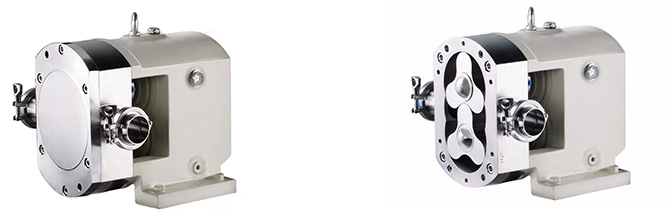
- Foods: Chocolate, concentrated milk, yogurt, honey, syrup, cane sugar, tomato juice, concentrated juice, jam, ice cream, milk, yeast slurry, meat slurry, jelly, condiment, lees, soybean protein, flour slurry, etc.
- Pharmaceuticals: Ointments, extract, medicine latex, pill paste, syrup, health care products, drugs,vaccine etc.
Industrial chemical grade lobe pumps include, but are not limited to:
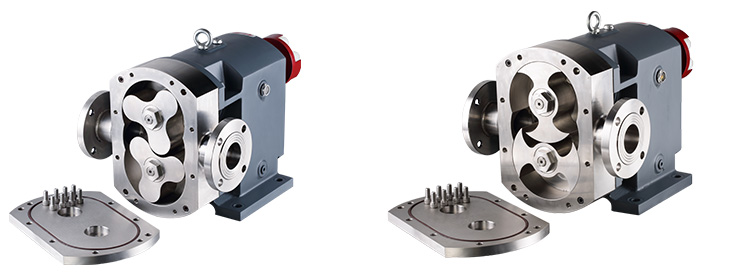
- Consumer chemicals: AES, LAS, AOS, K12, glycerol, fatty alcohol, bathing shampoo, skin cream, shampoo, detergent liquid, toothpaste soap, washing powder slurry, etc.
- Refined chemicals: Dyes stuffs, pigments, all kinds of pulp, chemical additives, adhesives, silicone oil, leather oil, a variety of colloidal materials, etc.
- Coating: Paint, dope, printing ink, insulating paint, resin, additives and assistants, organic solvent, etc.
- Chemical fiber: Pectic slurry, PVA, spandex slurry, vinylon slurry, Acrylic slurry, polyester slice, terylence, polypropylene fiber, rayon, functional fiber, etc.
- Pulp & Paper: Polyacrylamide, calcium carbonate, starch paste, carboxyl poly, starch paste, rosin size, paper pulp, filling dry strength agent, wet strengthen agent, sizing agent, filtering agent, anti foaming agent, spreading, water treatment chemicals, etc.
Below is the table for applications
|
Alcohol |
Coffee liquor |
Glycerin |
Mousse |
Sorbitol syrup |
Advantages of rotary lobe pumps
- High efficiency,energy-saving.
- Non-pulsating discharge, stable working.
- High temperature of 220 C degree handling (with FFKM o-rings).
- Capable of pumping mixture of gas, fluid and solid materials.
- No metal-to-metalrotorscontact,no friction andlong service life.
- Simpleand compact structure, easy maintenance and CIP/SIP capabilities
- Capable to pump the viscous material ≤1,000,000cp and pulp with the solid upto 70%.
- When equipped with frequency converter,flow rate can be adjusted and used asa metering pump.
- What is "slip"?
- Lobe pump clearances
- Pressure effect
- Temperature effect
- How viscosity affect pump sizing
- Cavitation
- Data required for rotary lobe pumps selection
- Rotary lobe pump brands andManufacturers
- Rotary lobe pump price
Lobe pump slip
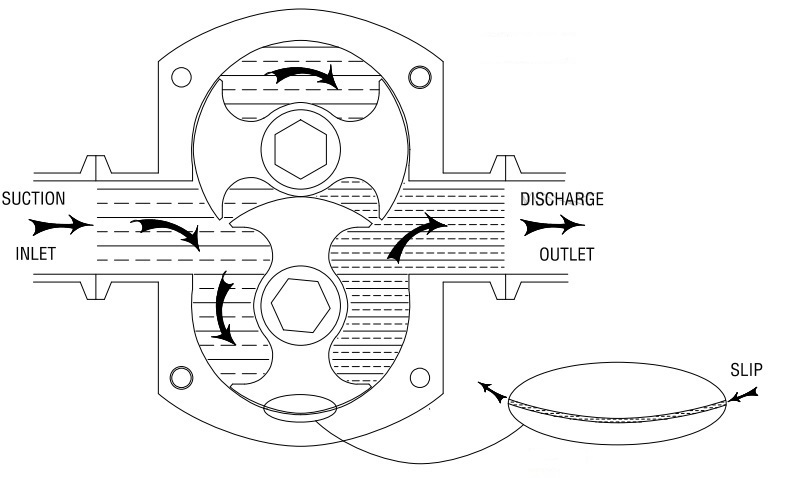
Slip is the portion of the pumped product that is forced back to the suction side of the pump due to pressure through the clearances. Rotary lobe pumps sometimes do not pump the full displacement for which they are rated because of a phenomenon called slip.To allow the pump’s rotors to rotate, small clearances must be maintained between the rotors and rotorcase. Slip will change directly with pressure and clearance, and inversely with viscosity.
Lobe pump clearance
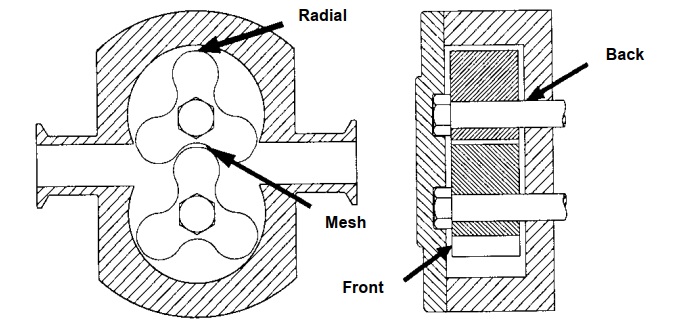
Within the casing of rotary lobe pumps there are clearances, which are the spaces between rotating components and between rotating and stationary components. Clearances are necessary to avoid rotor to rotor, rotor to rotorcase and rotor to rotorcase cover contact. The size of these clearances is related to the pressure and temperature of pump operation.
The key clearances are as follows:
- Radial clearance (between rotor tip and rotorcase).
- Mesh clearance (between rotors).
- Front clearance (between front of rotor and rotorcase cover).
- Back clearance (between back of rotor and back face of rotorcase).
Pressure effect to the pump
The design concept of the rotary lobe pump is to have no contacting parts in the pumphead. This requires having the shaft support bearings to be mounted outside of the pumphead, which results in an overhung load, caused by the rotors fitted to the shafts as shown. The effect of pressure on the rotors will cause shaft deflection, which could result in contact between rotors, rotorcase and rotorcase cover. To allow for this pressure effect, clearances are built into the pumphead between surfaces that may contact.
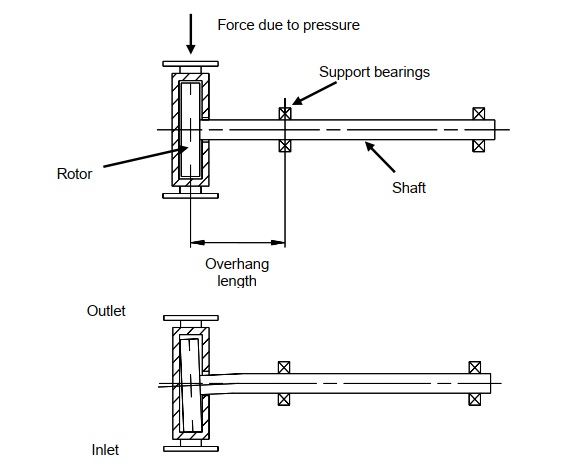
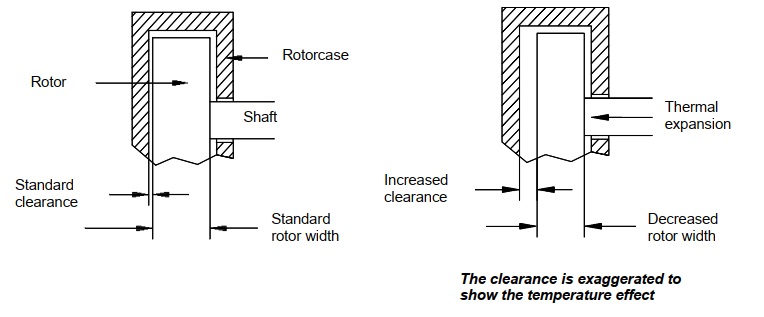
Temperature effect to the pump
Temperature change can be caused by the fluid being pumped, pump mechanism, drive unit and/or the environment. Any CIP (Cleaning In Place) operation required should also be taken into consideration. Changes in temperature will cause expansion upon heating or contraction upon cooling, to the rotorcase and gearcase components. The most significant result is movement between shaft and gearcase/rotorcase allowing the rotors to move forward or backward in the rotorcase. With the rotors being allowed to move forward there will be a reduction to the front clearance. To compensate for this, manufacturers will increase the clearance.
How viscosity affect pump sizing
Viscosity is a measurement of a product’s resistance to flow. Low viscosity products (e.g. water) have little resistance to flow, while higher viscosity products have a greater resistance to flow. It is key to positive pump sizing and operation because it affects slip within the pump as well as the pressure required to overcome frictional loss in the lines. Higher viscosity products smaller slip inside the pump.
How cavitation affect pump
Cavitation is the formation of vapor bubbles due to insufficient pressure at the inlet of the pump. High product temperature and/or low pressure on the inlet side of the pump can lead to insufficient pressure. Over time, cavitation can seriously damage a pump. Additional pressure energy would be required to supply the pump with the energy it requires to keep from cavitating. Four ways to increase the inlet pressure are raise the level of the product in the tank, pressurize the tank, lower the pump or decrease the product temperature.
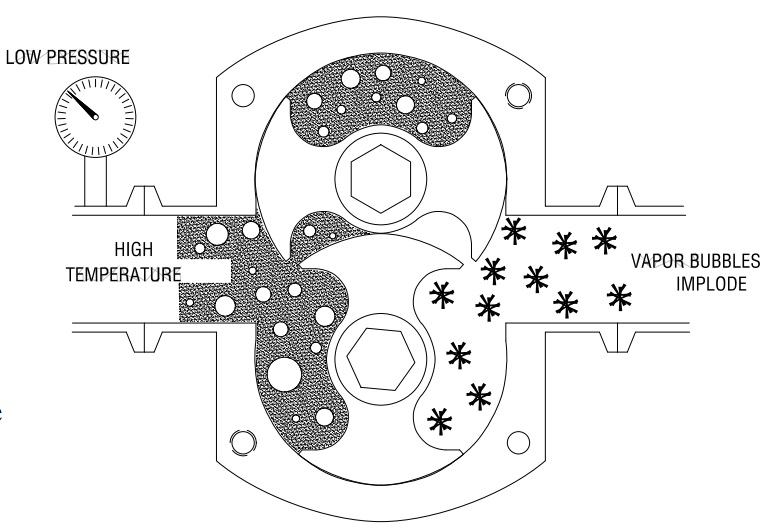
Data required for rotary lobe pumps selection Selection
- Product Name
- Product viscosity in pump, line and at rest
- Are there any solids present
- If so what are they and percentage concentration
- Specific gravity
- Capacity required
- Pumping temperature
- Discharge pressure or sketch of pipework system
- Suction pressure or sketch of pipework system
Rotary Lobe pump brands and Manufacturers
WrightFlow, Alfa laval, Waukesha, JEC, Inoxpa, Omac, Apv, Fristam, Jabsco, Xylem, boerger, Netzsch, Johnson, Bonve
Rotary Lobe pump price
For Bonve pump price, it is offered based on the customer’s requests. Below is the main need to supply.
- Bare shaft pump or complete unit required?
- If need fixed or variable speed driving?
- Material required for the liquid contact parts, such as SS304, 316, 316L, duplex 2205 etc.
- Mechanical seal type and material required?
- If required jacket or pressure relief valve?
Bonve also can recommend a suitable proposal with the budget.
- What is a rotary lobe pump?
- How rotary lobe pumps work?
- Rotary lobe pumps parts
- Lobes types and why different need?
- Construction material of lobe pumps
- Configuration Options of lobe pumps
What is a rotary lobe pump?

Rotary Lobe Pumps are positive displacement pumps able to transferring liquids products,especially for high viscosity, high solidand arefeatured aslow shearing. Gentletransferringmakes them popularused in food, cosmetics and industrial chemicalproducers. No damage to the pumped products.
How rotary lobe pumps work?
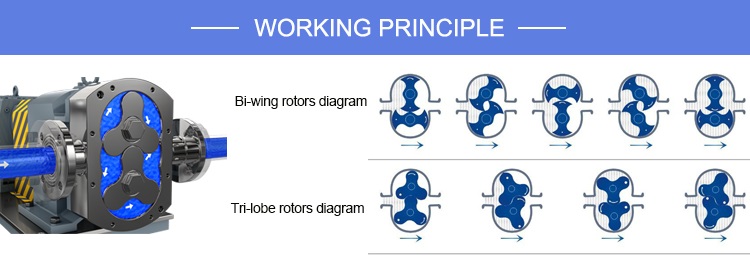
Rotary lobe pump working principle is easy to understand. They basically consist of two lobe rotors, which rotate synchronously driven by a pair of synchronous gears in the gearbox. The rotors are driven by the main shaft and sub-shaft to rotate in a synchronous reverse direction, which changes the pump capacity, builds up high vacuum and discharge pressure, thus an efficient pumping is formed.
Parts of rotary lobe pumps
The main parts are including rotors, pump cavity, mechanical seal, shaft, bearings and gears. They are processed by CNC to ensure high precision fabrication.

Constructionmaterials of rotary lobe pumps, but are not limited to:
Product contact metal parts: stainless steel AISI 316, 316L, duplex, 904L
Mechanical Shaft Seals: Tungsten carbide, Silicon carbide
Sealing Materials of O-rings: Viton, EPDM, FFKM
Configuration of rotary lobe pumps, normal types for Bonve brand.
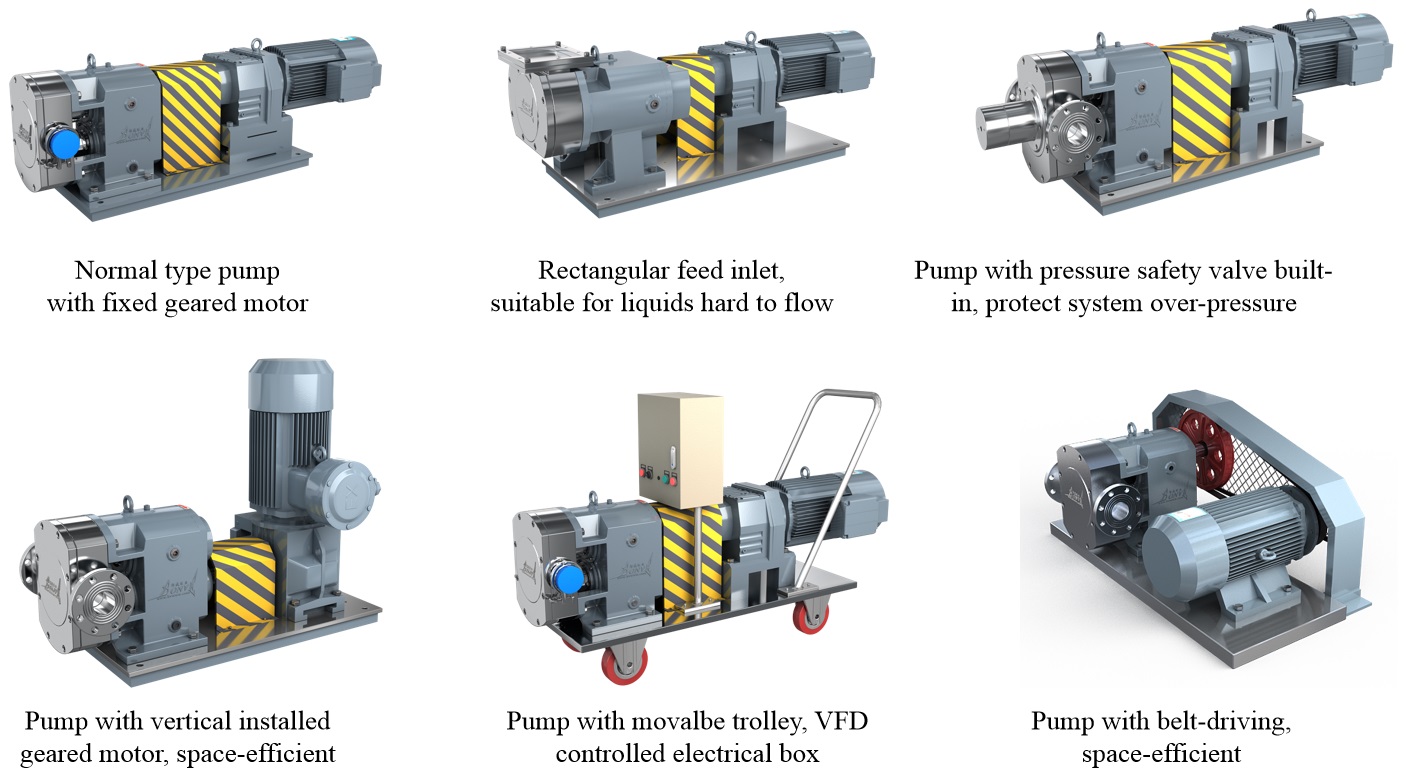
Lobes types and why different need

According to the different product transfer, manufacturers have different lobes design to make sure an efficient feeding and no failure, such as single-wing, bi-wing, tri-lobe, four-impeller, eight or twelve-impeller lobes. See below diagram which shows each lobes type application.
Positive displacement rotary lobe pumps and centrifugal pumps are the two main types used to transfer liquids. However, they have some distinct differences. They shows different talents when transfer liquids.The users should select with careful consideration. The following are the main differences between Positive displacement rotary lobe pumps and centrifugal pumps.
1. The difference in working principle
A Centrifugal Pump transfers the kinetic energy of the motor to the liquid through the rotating impeller. This increases the velocity and pressure at the discharge. The discharge velocity remains constant when motor rpm is constant. On the other hand, Positive displacement rotary lobe pumps suck a fixed volume of fluid in its cavity and force it to discharge into the pump outlet. So, it is a constant volume pump. Centrifugal pumps are high capacity and relatively low-head pumps whereas positive displacement pumps are low capacity high-head pumps.
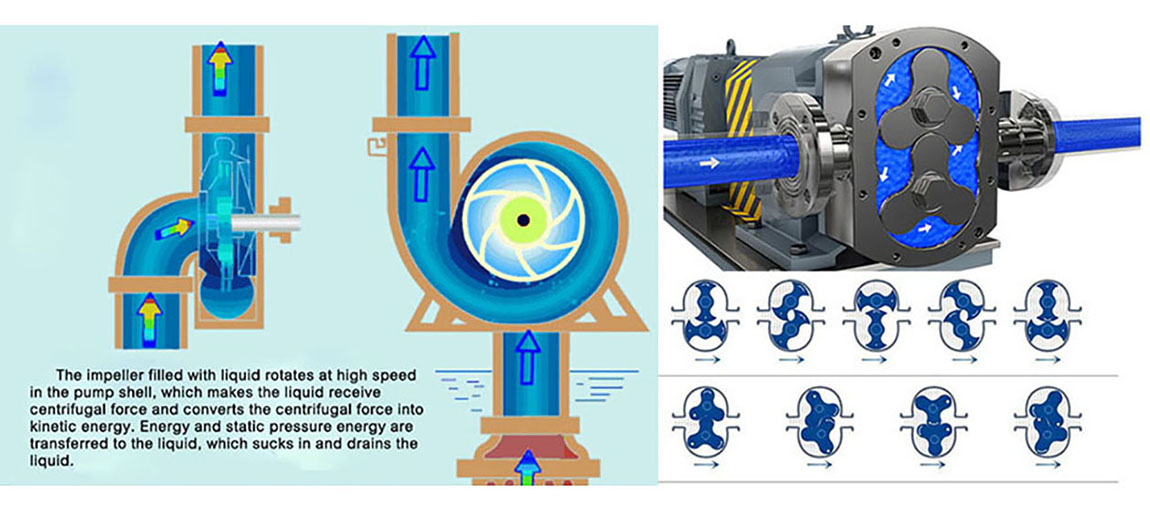
2. The Difference in fluid handling
A. The rotation speed of rotary lobe pump is directly proportional to the flow rate. For example, when their rotation speed is 100 rpm, the flow rate is 1 cubic, while when the rotation speed is 1000 rpm, it can be understood as 10 cubic, but there is a little efficiency loss, and the flow rate is about 9.5-9.8 cubic meters.
B. The centrifugal pump throws the medium out of the flow channel of the impeller by the high-speed rotation of the motor.
C. The viscosity of medium transferred by the rotary lobe pump is relatively large, such as heavy oil, viscous adhesives, food paste, etc.; The centrifugal pump can only deliver the medium with lower viscosity, and its delivery viscosity can only be lower than 3Cst.
3. The Difference in Performance
When you look at its performance table (Figure 1), centrifugal pumps and rotary lobe pump are quite different.
|
Centrifugal Pump |
Positive Displacement Rotary Lobe Pump |
|
A. Flow rate decreases with increasing viscosity |
A. Flow rate insensitive to changing pressure |
|
B. Flow varies with changing pressure |
B. Flow insensitive to changing pressure |
|
C. Efficiency decreases at both higher and lower pressures |
C. Efficiency insensitive to changing pressure |
|
D. Efficiency decreases with increasing viscosity |
D. Efficiency increases with increasing viscosity |
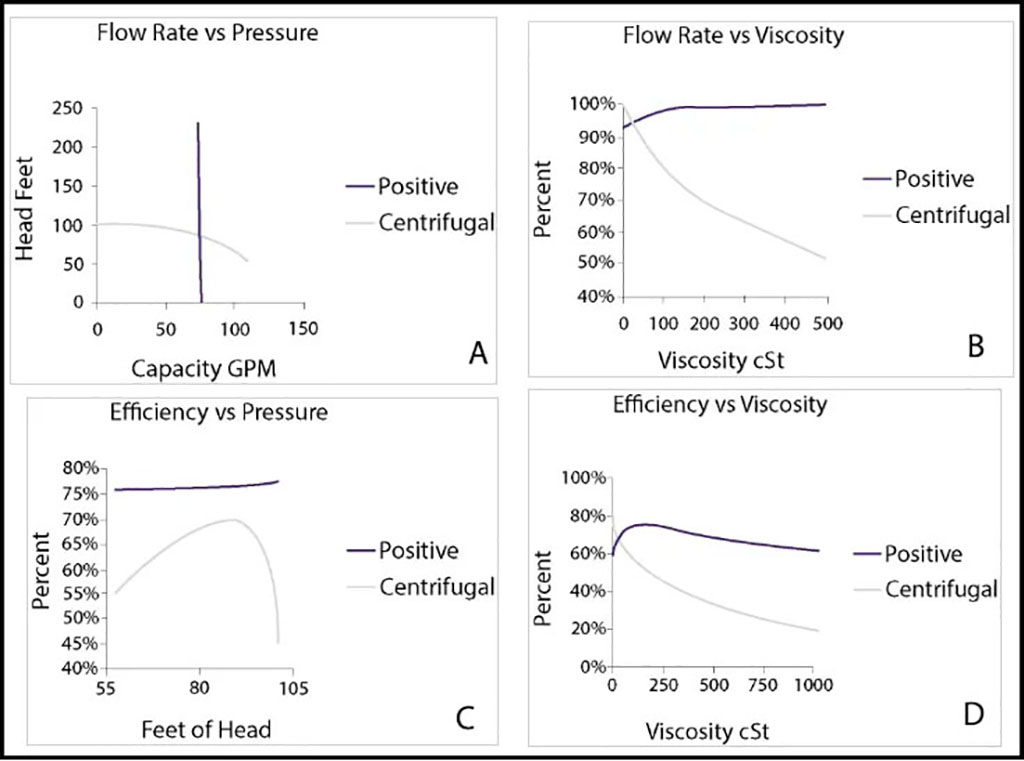
Fig. 1: Centrifugal Pump vs Rotary Lobe Pump Performance
4. The Difference in Inlet Conditions
These two types of pumps also have quite different requirements for inlet conditions. If you encounter periods where the pump remains "dry", a rotary lobe pump will prime on its own without liquid. On the other hand, a centrifugal pump is unable to create a pressure differential by priming without liquid already in the pump.
Centrifugal vs Positive Displacement Pump: Which one to Select?
A Positive Displacement Rotary Lobe pump will be a preferred selection in the following situations:
A. For high viscous applications.
B. For variable pressure conditions.
C. For changing viscosity conditions.
D. For high-pressure applications.
E. For shear sensitive liquids.
However, these are only a few criteria. Site experience accumulation is also required for selecting the right pump. Bonve is the leading manufacturer in rotary lobe pumps since 2001. When you choose a Bonve pump, you not only get the high quality pumps, but you also get the advantage of Bonve's engineering expertise and years of application knowledge in the food, chemical, pharmaceutical and cosmetics industries.
To find out more about Bonve rotary lobe pump, Click on the picture below
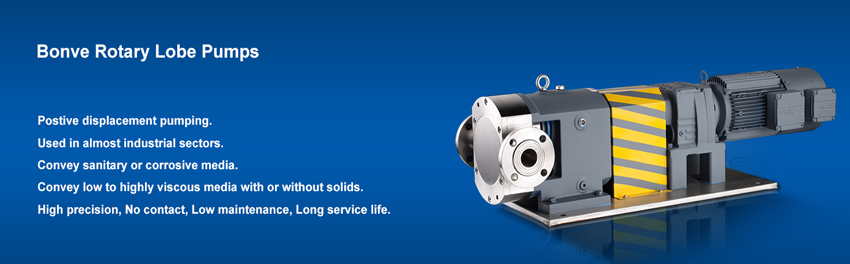
Rotary Lobe Pumps by BONVE: The Ultimate Solution for Efficient Fluid Transfer
In industries where precision, reliability, and efficiency are non-negotiable, the choice of pumping technology can make or break operations.
Enter BONVE’s Rotary Lobe Pumps—a game-changer in fluid handling systems. Designed for versatility and durability, these pumps are engineered to meet the rigorous demands of modern industrial applications.
Whether you’re in food processing, pharmaceuticals, chemicals, or wastewater management, BONVE’s rotary lobe pumps deliver unmatched performance. Let’s dive into what makes these pumps a standout choice.
What is a Rotary Lobe Pump?
A rotary lobe pump is a type of positive displacement pump that uses rotating lobes to transfer fluids. Unlike centrifugal pumps, which rely on high-speed impellers, lobe pumps operate at lower speeds while maintaining a gentle pumping action. This makes them ideal for handling shear-sensitive, viscous, or abrasive fluids without compromising product integrity. BONVE’s rotary lobe pumps feature a robust design with two synchronized lobes rotating within a precisely machined casing, ensuring smooth and pulsation-free flow.
Key Features of BONVE Rotary Lobe Pumps
1.High Efficiency & Precision
BONVE pumps are optimized for energy efficiency, reducing operational costs while maintaining consistent flow rates. Their precise lobe synchronization minimizes internal slip, ensuring accurate volumetric delivery even with challenging fluids.
2.Gentle Handling of Sensitive Products
For industries like dairy, beverages, or cosmetics, product consistency is critical. The pump’s low-shear operation preserves the texture, viscosity, and quality of delicate fluids like creams, sauces, or emulsions.
3.Durable Construction
Built with high-grade stainless steel, BONVE pumps resist corrosion, abrasion, and high temperatures. The hygienic design also meets strict sanitary standards (e.g., EHEDG, FDA), making them suitable for food and pharmaceutical applications.
4.Easy Maintenance
The pump’s modular design allows quick disassembly without moving the entire unit. Replaceable lobes and seals reduce downtime, while the CIP (Clean-in-Place) compatibility streamlines sanitation processes.
5.Versatility Across Fluids
From thick pastes and slurries to solvents and oils, BONVE pumps handle a wide viscosity range (up to 1,000,000 cP). They’re also effective for fluids containing solids or particulates, thanks to the generous clearances between lobes and the casing.
Applications of BONVE Rotary Lobe Pumps
Food & Beverage: Transferring syrups, chocolate, yogurt, or beer with zero contamination risk.
Pharmaceuticals: Metering sterile liquids, creams, or active ingredients.
Chemicals: Handling aggressive acids, polymers, or adhesives.
Wastewater Treatment: Moving sludge, grease, or bio-solids.
Cosmetics: Pumping lotions, shampoos, or fragrances.
Why Choose BONVE?
BONVE combines decades of engineering expertise with a customer-centric approach.
Here's why Bonve rotary lobe pumps are trusted globally:
Customizable Solutions: Tailored configurations for flow rates, materials, and sealing options.Global Support: A robust service network ensures prompt maintenance and spare parts availability.
Sustainability Focus: Energy-efficient designs align with eco-friendly industrial practices.
Conclusion
BONVE's rotary lobe pumps exemplify innovation and reliability in fluid transfer technology. By prioritizing efficiency, hygiene, and adaptability, they empower industries to optimize processes while reducing total cost of ownership. Whether you're upgrading existing systems or designing a new production line, BONVE's pumps are engineered to exceed expectations.
Ready to transform your fluid handling operations? Explore BONVE's rotary lobe pump range today—where precision meets performance.
Email: bvsales3@Bonvepumps.com for more information or contact our technical team for a customized solution!
How to remove and install the homogenizer mixing pump when pump ship to the destination port? Below are the tips to install Bonve high shear mixer.
1. Pump sent to area other than China will be packed in plywood case.
2. Users are advised to check the packing list, instruction manual, certificate of qualification, and other accessories attached after opening the wooden case.
3. Pump can be delivered to the installation site when the sealing bags at the inlet and outlet remain intact.
4. In hoisting, the hoist links at the pump body and the motor are available for use. If possible, users is better to carry the pumps with forklift trucks, handle with care.
5.The foundation of pump installation should have a horizontal plane. In line with the installation dimensions, four basic holes should be scooped first. Then ground screws are to be put into the holes for cement casting. When the cement is dry, use sizing block to adjust the chassis and make it horizontal. Lastly, screw up the ground bolts.
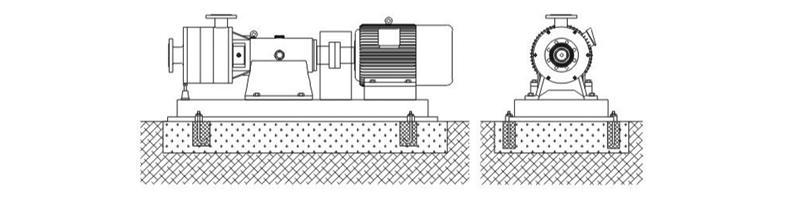
6. Pipe linking the pump should have supports respectively, which should not be the pump body.
7. To avoid damage to the pump's motor, install an overload current protection device during installation.
8. When the pump is installed, there should be a filter set ahead of the pump inlet. The filter screen should be 20 meshes or greater.
9. In installation, at pump inlet should be fixed a gauge valve for convenience of damaged meters replacement.
10. After the pump is installed, mark the ground connection point at the motor and make it connect the earth in accordance with the national safety standard.
11. If the pump is mobile type, hose should be used as at the inlet and outlet of the pump. In this case, valve and manometer are not necessary. The pump can only be pulled on level ground as four wheels (two of them are wheels) are fixed below the base plate. In case of too steep slope or a sharp turn, particular care should be taken to prevent any off-balance or sliding.
Click to view tips on installing Bonve rotary lobe pumps
Hello there! Today, let’s talk about pumps—the unsung “hearts” of industrial operations. But did you know? Not all pumps are created equal!
Thanks to two groundbreaking design innovations, our pumps deliver unmatched stability, durability, and cost savings. Let’s dive into the “secret tech” hidden in the details!
1. Bearing Design: Six-Point Support for Rock-Solid Stability!
Imagine balancing a glass of water with three fingers instead of two—wouldn’t it be steadier? That’s the philosophy behind our bearing system!
Pain Points of Traditional Pumps:
Most competitors use 4 bearings, leading to shaft wobbling, faster wear-and-tear, and frequent maintenance.
Our Solution:
Six independently placed bearings create a “triple-support” structure for each shaft:
Front-End Double Lock: Two cylindrical bearings secure radial movement, eliminating side-to-side wobble.
Back-End Powerhouse: A double-row angular contact bearing locks axial displacement, preventing forward/backward shifts.
Benefits You’ ll Love:
Zero vibration, zero pulsation—whether handling high or low pressure.
Extended bearing life boosts durability for the shaft, mechanical seal, and entire pump.
Maintenance? Barely needed! Save time, labor, and repair costs.

More details about Bonve lobe pump pls click the picture.
2. Shaft Key Design: No More Slipping, Just Seamless Sync!
Traditional pumps use shrink disks to connect gears and shafts—like glueing parts together. Under high pressure or sudden starts, gears slip or collide, causing breakdowns.
Our Innovation:
Meet the shaft key structure—a Lego-like precision fit!
Gears and shafts interlock via precisely machined keyways, ensuring perfect synchronization.
Handles high pressure, viscous fluids, and instant startups without a hiccup!
Why It Matters:
Zero collisions, zero downtime—maximize production efficiency.
Slash failure rates and keep your operations running smoothly.
3. Why Choose Us?
Stability: 6 bearings vs. competitors' 4.
Durability: Shaft keys outlast shrink disks.
Peace of Mind: Reduce maintenance costs—your team will thank you!
Final Thought:
A pump's true power lies in its hidden details. Our design isn't about flashy features—it's about making your operations faster, smoother, and hassle-free.
Next time you need a pump, ask: “Does it have six bearings and a shaft key?”
Ready to upgrade? Contact us for a tailored solution!
Earthquake resistant engineering has evolved significantly in recent years, incorporating cutting-edge materials and technologies to enhance structural resilience. One such innovation is the application of neodymium magnets, which have emerged as a promising tool for mitigating earthquake-induced damage. These powerful rare earth magnets offer unique properties that can improve energy dissipation, damping mechanisms, and overall structural stability during seismic events.
Magnetic Damping Systems
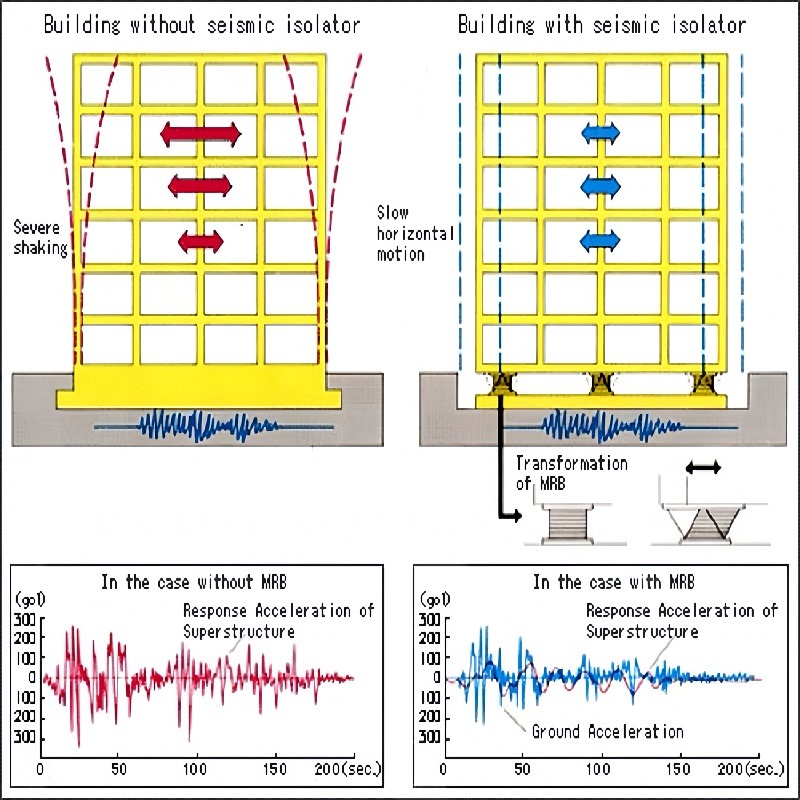
Neodymium magnets play a crucial role in passive damping systems, which help reduce the amplitude of seismic vibrations. Engineers have developed magnetorheological (MR) dampers, where a fluid infused with iron particles responds to magnetic fields generated by neodymium magnets. By adjusting the magnetic field intensity, the viscosity of the fluid changes, allowing real-time control over damping forces and improving a building’s ability to withstand earthquakes.

Magnetic Levitation for Base Isolation
Another innovative application of neodymium magnets in seismic engineering is in base isolation systems. Traditional base isolators rely on rubber and steel layers to absorb ground motion. However, researchers are exploring the use of magnetic levitation, where high performance neodymium magnets create repulsive forces that suspend structures above their foundations. This system significantly reduces the transmission of seismic energy to the building, minimizing structural damage.
Energy Harvesting for Structural Monitoring
Neodymium magnets are also being used for energy harvesting in earthquake-resistant buildings. By converting mechanical vibrations into electrical energy, magnetic induction systems powered by neodymium magnets can supply energy to structural health monitoring devices. These sensors help detect early signs of damage and provide real-time data to engineers, ensuring timely maintenance and safety assessments.
Future Prospects
The use of good quality neodymium magnets in earthquake resistant engineering is still evolving, with ongoing research exploring new ways to enhance earthquake resistance. As technology advances, we can expect more cost-effective and efficient applications, improving the safety and durability of infrastructure in earthquake-prone regions.
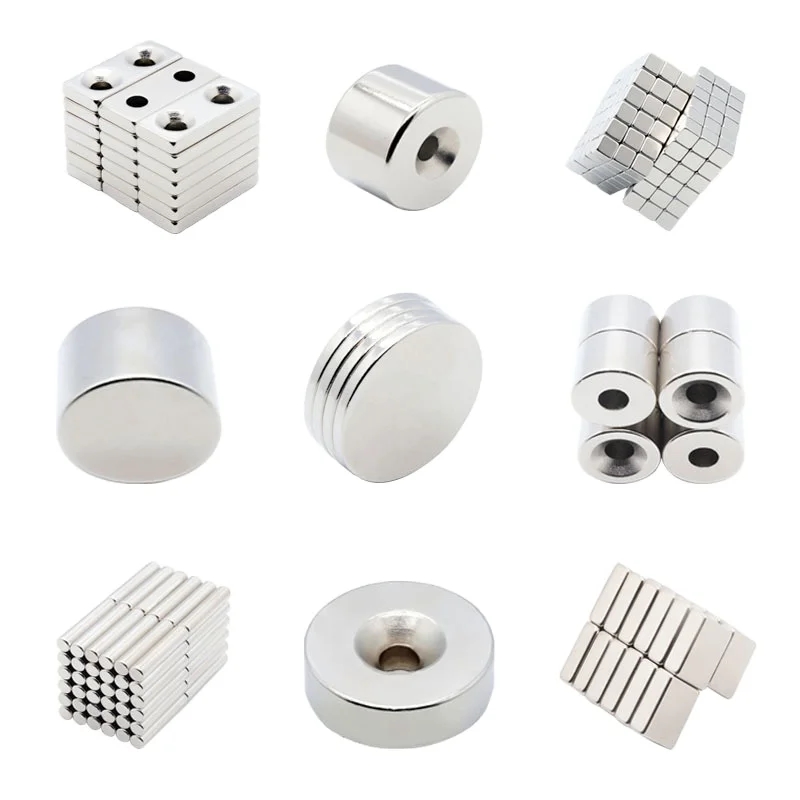
Neodymium magnets, known for their exceptional magnetic strength and compact size, are playing an increasingly vital role in advancing space exploration technologies. Their unique properties make them indispensable in both spacecraft propulsion systems and the emerging field of space resource utilization. However, their application in the harsh environment of space also presents significant challenges.
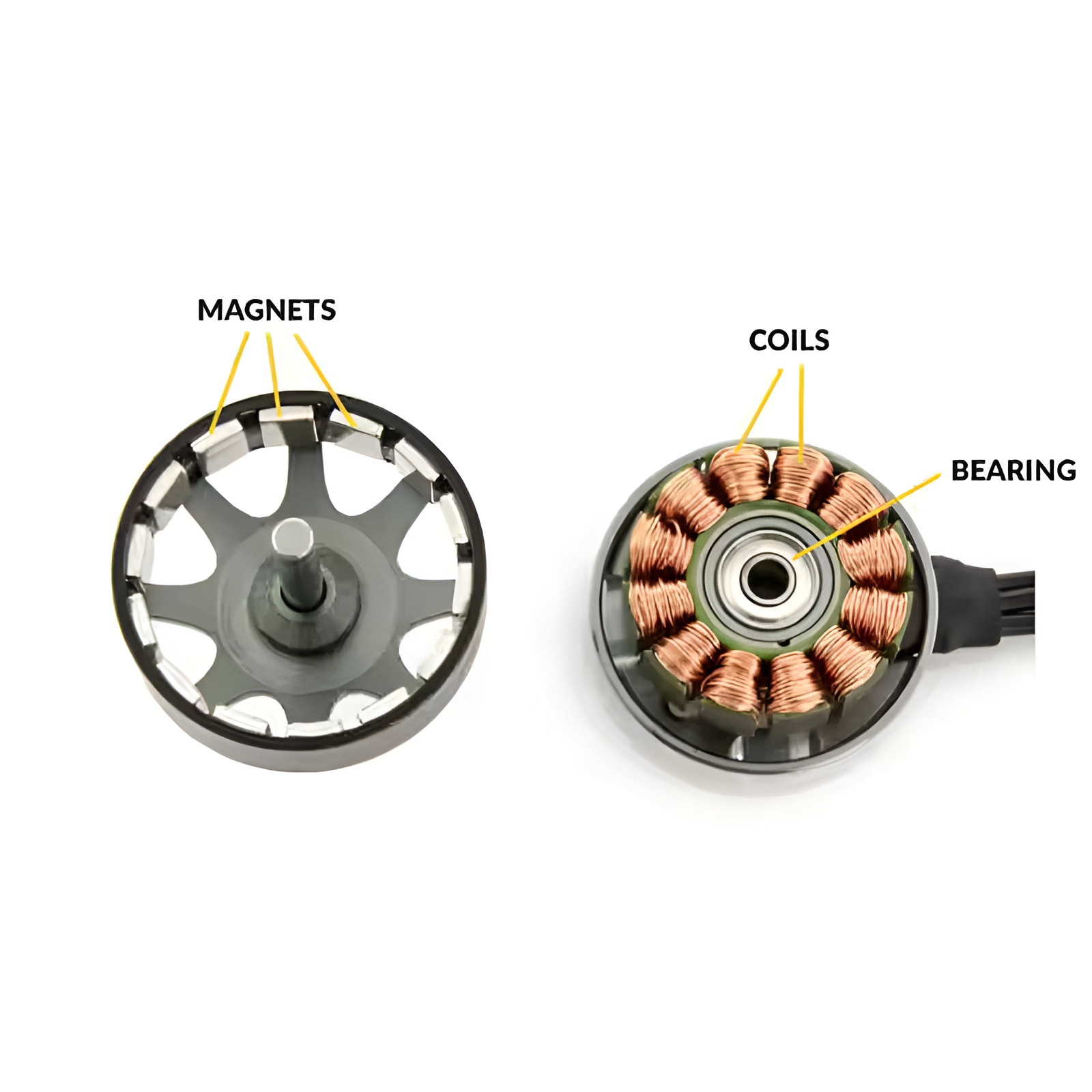
One of the most promising applications of high performance neodymium magnets is in advanced propulsion systems, such as ion and plasma propellers. These systems rely on strong magnetic fields to accelerate charged particles, generating thrust with high efficiency. Neodymium magnets, with their high magnetic energy density, are ideal for creating the compact yet powerful magnetic fields required. For example, in ion propellers, these magnets help confine and direct plasma, enabling spacecraft to achieve higher speeds while consuming less fuel compared to traditional chemical propulsion. This technology is particularly valuable for long-duration missions, such as interplanetary travel, where efficiency is critical.
Another exciting frontier is the use of neodymium magnets in space resource extraction, particularly in asteroid mining. Asteroids are rich in valuable metals like iron, nickel, and rare earth elements. Neodymium magnets can be employed to separate and collect these magnetic materials in the micro gravity environment of space. For instance, magnetic separators equipped with neodymium magnets could efficiently extract iron-rich particles from asteroid weathering layer, paving the way for in-situ resource utilization (ISRU). This capability could reduce the need to transport materials from Earth, significantly lowering the cost and complexity of space missions.

Despite their potential, super quality ndfeb permanent magnets face challenges in space applications. The extreme conditions of space, including high levels of radiation and drastic temperature fluctuations, can affect their performance. Prolonged exposure to cosmic radiation may lead to demagnetization, while temperature variations can alter their magnetic properties. Additionally, the micro gravity environment poses unique engineering challenges in designing systems that can reliably operate with magnetic forces.
To overcome these challenges, ongoing research focuses on developing radiation-resistant coatings and advanced alloys that enhance the durability of neodymium magnets in space. Furthermore, innovations in magnetic system design aim to optimize their performance in micro gravity. As space exploration continues to expand, the role of neodymium magnets is expected to grow, enabling more efficient propulsion, sustainable resource utilization, and groundbreaking discoveries in the cosmos.
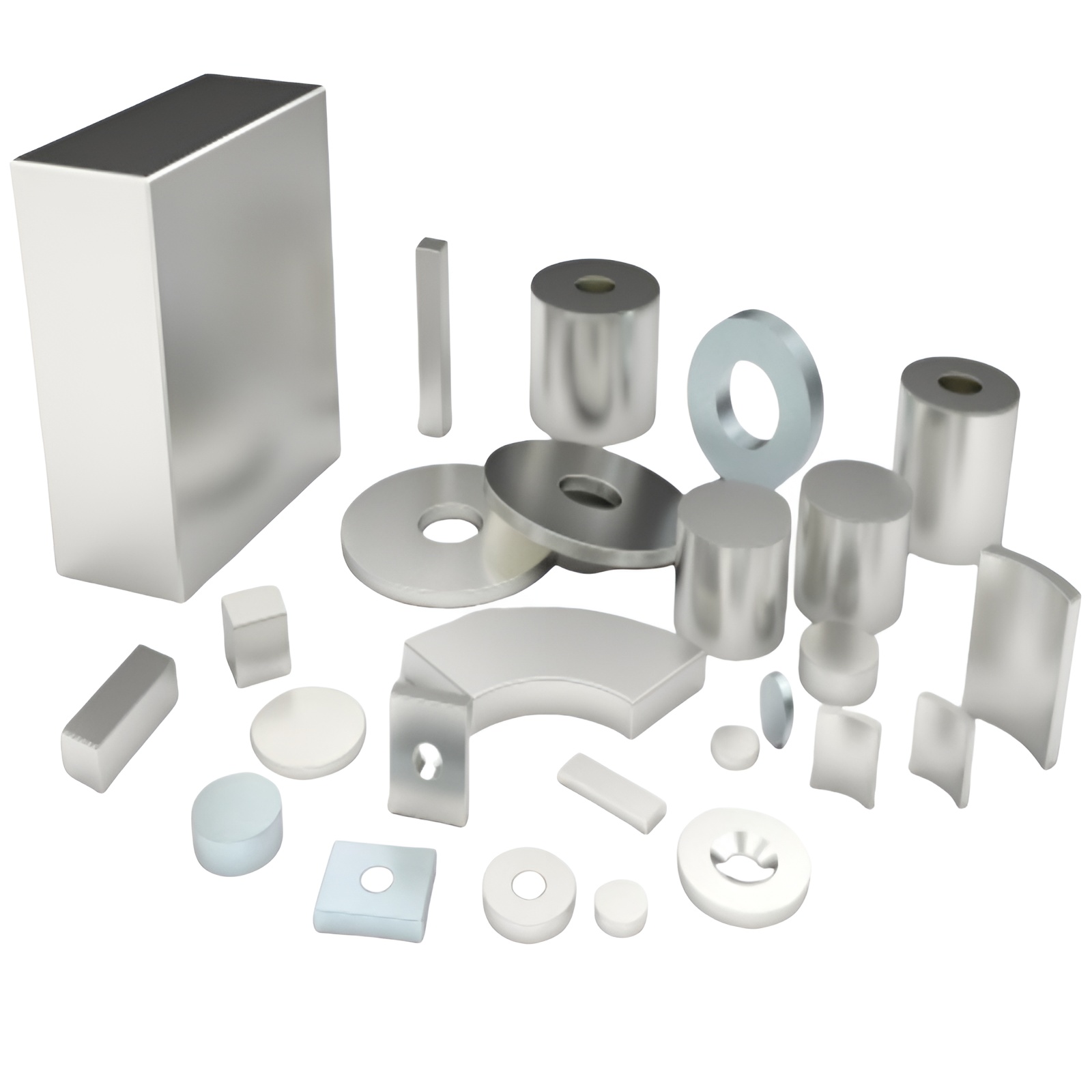
In conclusion, powerful neodymium rare earth magnets are a key enabler of modern space exploration, offering solutions to some of the most pressing challenges in propulsion and resource extraction. However, addressing their limitations in space environments will be crucial to unlocking their full potential.
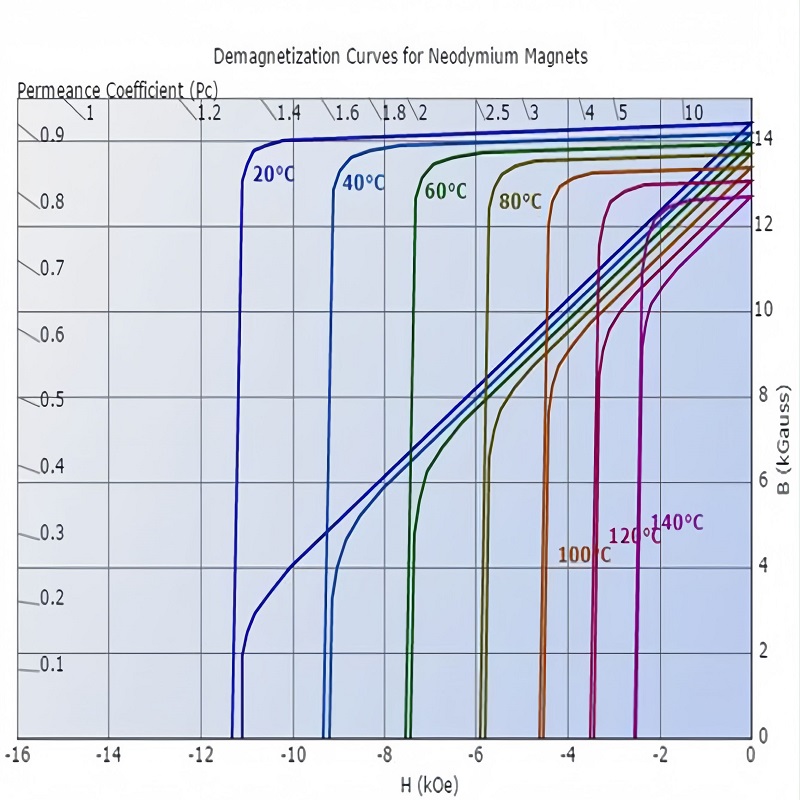
High temperature resistant ndfeb magnets are widely used in various applications due to their powerful magnetic properties. However, their performance tends to degrade at high temperatures, which limits their use in certain environments. The good news is that there are several methods to enhance the high-temperature resistance of these magnets, allowing them to maintain their strength and functionality in extreme conditions.
Material Composition Adjustments
One of the most effective ways to improve the high-temperature stability of neodymium magnets is by modifying their material composition. By introducing specific elements into the alloy, such as dysprosium (Dy) or terbium (Tb), the magnets can be made more resistant to heat. Dysprosium, in particular, helps to improve the coercivity (resistance to demagnetization) of neodymium magnets at elevated temperatures. This ensures that the magnet retains its strength even when exposed to extreme heat.
Coatings and Surface Treatments
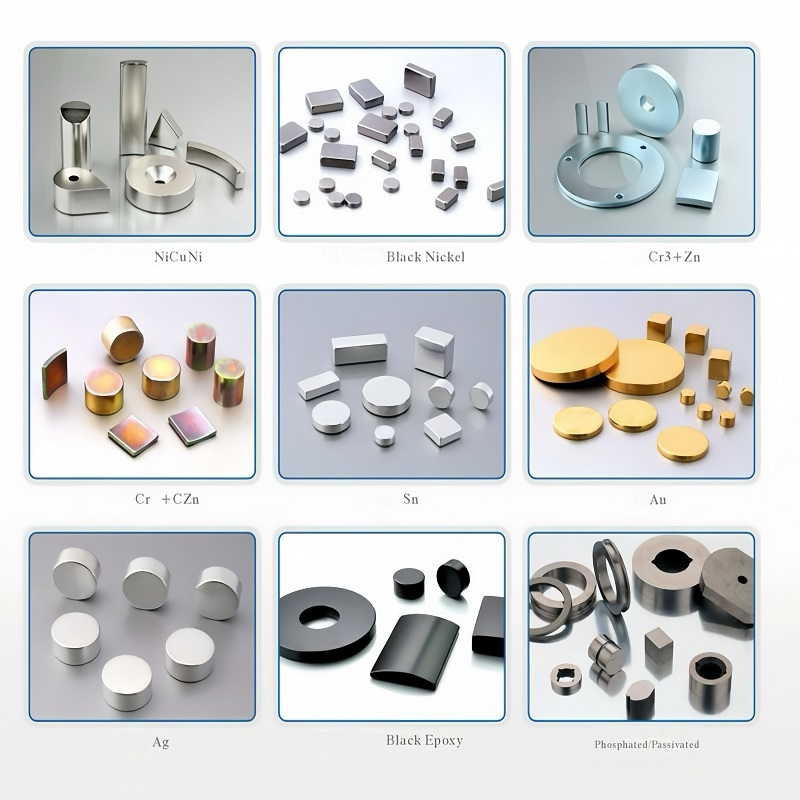
In addition to altering the material composition, coatings and surface treatments play a crucial role in enhancing the high-temperature performance of durable rare earth magnets. Applying protective coatings can help shield the magnets from oxidation, which is another factor that can degrade their performance at high temperatures. These coatings provide a thermal barrier and help maintain the structural integrity of the magnet, even in harsh environments.
Advanced Magnet Design
Another approach to improving high-temperature performance is through advanced magnet design. For example, incorporating multi-layered coatings or using composite magnet structures can help distribute thermal stress more evenly. This allows the magnets to handle temperature fluctuations better without compromising their magnetic strength.
Conclusion
While neodymium magnets are known for their powerful magnetic properties, their performance at high temperatures can be a challenge. By adjusting their material composition, applying protective coatings, and optimizing their design, it is possible to significantly improve their high-temperature resistance. As technology continues to advance, these innovations will allow good performance neodymium magnets to be used in even more demanding applications, from electric vehicles to aerospace technology, where high temperature stability is critical.
| suffix on a brand name | Rev.Temp.Coef.of Induction(br),a,%/℃(20-100℃) | Rev.Temp.Coef.of Coercivity(Hci),b,%/℃(20-100℃) | Maximum working temperature |
| N | -0.12 | -0.6 | 80℃=176℉ |
| N | -0.12 | -0.58 | 100℃=212℉ |
| H | -0.11 | -0.58 | 120℃=248℉ |
| SH | -0.1 | -0.55 | 150℃=302℉ |
| UH | -0.09 | -0.52 | 180℃=356℉ |
| EH | -0.085 | -0.5 | 200℃=392℉ |
| VH/AH | -0.08 | -0.45 | 230℃=446℉ |
| 60℃ for N50 and N52 |
- Automotive Engine Rubber Parts8
- Automotive Lamps Rubber Parts5
- Automotive Suspension Rubber Parts2
- Automotive Wiring Harness Rubber Parts3
- Extrusion Sealing Strip1
- GEO8
- Industrial Electrical Rubber Parts3
- Industrial Scanners2
- Industrial electrical control3
- Industrial magnet accessories2
- Industrial slings4
- Machine Tool Blades1
- Membrane Products1
- Motor1
- Racecource Rubber Products3
- Rubber Forklift Attachments1
- Rubber and plastic Parts1
- Seal2
- Tubular Motor2
- blade1
- brush1
- chip1
- industrial hose1
- lens1
- mold1
- plc3
- pump2
- racking2